Warrior Cat Names: Ideas for Every Character
A memorable name gives your feline hero a first impression before the story begins. The right choice can connect your character’s appearance, personality, and place in the clan. You may be naming a bold fighter, a quiet healer, or a curious kit with an unusual past. A fitting name helps readers picture that cat before the first scene unfolds.
A Clan cat’s name has a prefix, the first part of a Clan cat’s name, usually chosen at birth and often tied to appearance or nature. A suffix, its ending, can add a clue about rank, skill, or story. You can use those parts to make names that feel at home in the wild, without losing what makes your character distinct.
Here, you’ll find ideas for different coats and moods, plus ways to build a name of your own. You’ll also see how names can shift with rank and how other groups name their cats. Start by thinking about the one detail you most want the name to convey.
Table of Contents
How Are Warrior Cat Names Formed?
A Clan cat’s name joins a prefix to a suffix, with the two parts working together rather than serving as unrelated labels. Together, they make a name that can suggest a cat’s looks, life, or role. Brambleclaw is one example of this joined form.
The prefix usually comes from a parent, often the mother, and typically stays with the cat. The suffix can change as the cat grows and takes on new roles. Vicky Holmes devised the changing-name hierarchy for Warriors.
Choose words a wild cat could know from its world, not objects made by humans.
An early draft called Tigerclaw “Hammerclaw.” The story team changed it because cats would not know what a hammer was. That change offers a useful test for original name ideas: could a wild cat recognize the thing or image in each part?
Natural words can still feel fresh when you pair them in an unexpected way. A familiar prefix can meet a suffix that points toward a cat’s skill or story. Before settling on a combination, ask whether a cat living in the wild could recognize both parts.
How Do Prefixes and Suffixes Describe a Character?
A strong pairing gives you one clue about what the cat looks like and another about its character or story. Neither part needs to carry one fixed meaning. You can treat prefixes and suffixes as building blocks, then choose the meaning that fits your own character.
Choose a prefix from visible traits or natural imagery
A prefix can point to fur, face, size, or a striking mark. Ash may suit a gray coat, while Blue can bring a cool tone to mind. These are possible cues, not rules about what every cat with that prefix must look like.
Prefixes can also call up an animal, plant, or weather image. Canon Clan prefixes include Acorn, Ash, Blue, Bramble, Cinder, Cloud, Fire, Frost, Holly, Jay, Maple, Moth, Rain, Raven, River, Shadow, Squirrel, Storm, Tiger, and Willow. Use this canon set as inspiration, not as a code with one answer.
A plant name may suggest a woodland home, while Rain might fit a cat born during a storm. You can choose an image that matters to the character’s history, even if it says little about the cat’s coat.
Use the suffix to suggest skill, temperament, or story
A warrior suffix can add an idea about appearance, personality, skill, or the cat’s importance to someone else. Canon Clan suffixes include -bark, -berry, -bird, -blaze, -branch, -breeze, -claw, -cloud, -dawn, -fang, -feather, -flight, -flower, and -foot.
A suffix can evoke a fast runner, a skilled fighter, or a cat linked to a key moment. Yet -claw does not make every cat fierce, and -flower need not mean every cat is gentle. Let the character’s actions give the name its meaning.
Warrior names also draw on nature familiar to wild cats. The natural details used in the naming tradition should be found in the UK. In an early draft, Squash Blossom became Apple Blossom because squash was not a fitting natural reference.
That choice shows how a small change can make a name feel more rooted in the cats’ world. Choose a combination that lets you picture the cat without forcing a single rigid meaning onto either part.
Male Character Name Ideas
A male character can use the same nature-based naming structure as any other Clan cat, so the best pick is the one that suits his character. These five original name ideas offer different sounds and images. None is a canon character or a rule for male names.
Clan names do not need gender-specific endings. The following combinations are original suggestions for a character you create:
- Hawkclaw
- Oakheart
- Ravenflight
- Stonepelt
- Bramblefang
Hawkclaw may suit a sharp-eyed fighter, while Oakheart can suggest a steady nature. Ravenflight has a quick, airy sound, and Stonepelt feels solid. Bramblefang combines a rough image with a strong ending.
Those impressions are choices you make for your character, not fixed meanings built into the parts. A gentle cat could carry a name with “fang” if the story gives that name a different edge. The same is true of a quiet cat with a name that sounds bold.
Sound matters, too. Hootwhisker is a name the Warriors story team singled out for its sound, a reminder that an enjoyable name should feel good to say. Try saying a few options aloud and notice which one feels natural in dialogue.
Canon suffix options also include -heart, -pelt, -tail, and -wing. They can work in many combinations, regardless of a character’s gender. Pick the name for the cat you have imagined, not for a rule that divides names by gender.
Which Names Fit Black, White, and Ginger Cats?
A black cat’s name can make its dark coat the first impression, as in the original suggestion Shadowmask. Dark and pale coats offer clear visual contrasts, but the name can still leave room for personality. These are original ideas, not official character names.
Dark and pale coats
Black, White, Cloud, and Ash appear as canon prefixes, so each can inspire a coat-based idea. Shadowmask puts focus on a dark face, while a white cat might suit a name that evokes a pale coat. Canon suffixes such as -fur, -mask, -whisker, and -spots can help describe visible details.
Use color as a starting clue rather than a complete character description. A black cat may have a white muzzle, and a pale cat may carry dark markings. A name can highlight one striking feature instead of trying to list every shade.
Gray, ginger, and mixed coats
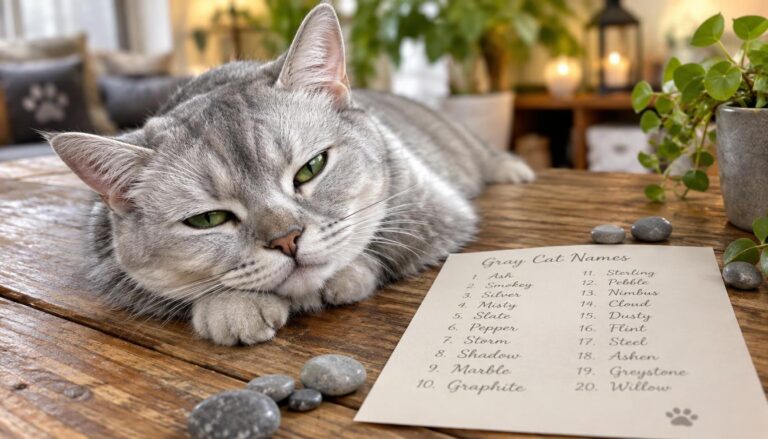
Cloud can bring gray fur or misty markings to mind, while a warm prefix can suit a ginger pelt. Calico and other mixed coats give you another option: choose a prefix that hints at contrasting patches. The visual cue can be more useful than a precise color label.
| Coat color or pattern | Prefix | Original suggested name | Visual cue |
|---|---|---|---|
| Black | Shadow | Shadowmask | Dark face |
| White | Snow | Snowwhisker | Pale coat |
| Gray | Cloud | Cloudspots | Misty markings |
| Ginger | Flame | Flamefur | Warm fur |
| Calico | Patch | Patchtail | Contrasting patches |
Some prefixes in the table, such as Snow, Flame, and Patch, are used here as original suggestions. The names pair those images with a feature a reader can picture. Let the coat guide one part of the name, then avoid forcing every visual detail into it.

Nature Names With a Softer Sound
A gentle name often begins with a quiet nature image rather than a description of a fighter. Soft sounds can come from a plant, water, bird, or dawn image. These original name ideas may suit a calm or reflective character.
Pretty Warrior Cat names can still feel grounded in the wild. Heather, Willow, and River appear as canon prefixes, while -glow, -pool, -shade, and -stream appear as canon suffixes. You can use those familiar building blocks to create a new combination.
- Willowglow
- Heatherpool
- Riverstream
- Dawnshade
- Rainflower
- Birdsong
Willowglow brings a plant and a soft light together. Heatherpool blends a flower image with water, while Riverstream leans into flowing water. Dawnshade sets a quiet hour against a patch of shadow.
A soft sound should still suit the cat’s life and temperament. Rainflower may fit a thoughtful character, and Birdsong could suit one known for a clear call or a lively presence. Such links are choices for your story, not fixed meanings for each word.
Some names feel gentle because their sounds move easily when spoken. Others get that mood from a calm image rather than a soft ending. Let one clear nature image carry the mood instead of stacking several similar plant or weather terms.
How Do Names Change With Rank?
A Clan cat’s ending changes with rank, while the prefix generally remains part of the name. The suffix gives a clue to the cat’s place in Clan life. It does not always state the cat’s exact age.
From kit to apprentice
Clan kits use -kit, and apprentices usually use -paw. Apprentices are traditionally at least six moons old and have a mentor. If training starts later, the suffix follows rank rather than a strict birthday.
The apprentice ending marks training, not a fixed age by itself. Sunkit could become Sunpaw when training begins. The prefix stays, so a reader can still recognize the cat through the change.
Warrior and leader names
A warrior receives a descriptive suffix after completing training. A leader takes -star, which signals leadership and a connection to StarClan. These endings serve different purposes: a warrior suffix can describe a cat, while -star names the leader’s role.
| Rank | Suffix | Example | What it signals |
|---|---|---|---|
| Kit | -kit | Sunkit | Nursery age |
| Apprentice | -paw | Sunpaw | Training |
| Warrior | Descriptive suffix | Sunfall | Completed training |
| Leader | -star | Sunstar | Leadership and connection to StarClan |
Firestar’s names show how one cat’s prefix can stay in place across several stages. As a house cat, he was Rusty; as an apprentice, Firepaw; as a warrior, Fireheart; and as a leader, Firestar.
That sequence shows a prefix can become familiar even as the suffix changes. Read the ending as a clue to the cat’s current place in the Clan, not as an exact age label.
When Can a Warrior Cat’s Name Change?
A name change is unusual in Clan life, but it can mark a real shift in identity or standing. Unusual does not mean meaningless: a cat or its parents may feel the name no longer fits. A leader can also lose the suffix that marks the role.
A name change works best when it reflects a story event. A cat may earn a new name after an accomplishment, a discovery, or an action in battle. The change can show how the Clan sees that cat or how the cat sees itself.
A leader who retires or is deemed unworthy may lose -star and return to the warrior name. That shift changes the cat’s standing in the Clan. It is not the same as choosing a new name just for variety.
Flamekit rejected Flameheart and later chose Nightheart. The change let him shape an identity separate from a famous ancestor. His choice shows how rejecting a name can matter as much as earning one.
For an original character, give the change a clear cause and an effect on relationships or self-image. A new suffix may tell the Clan what happened, while a chosen change can reveal what the cat wants to leave behind. Treat a name change as part of the character’s story, not as a routine way to freshen a name.
How Can You Build a Name or Use a Generator?
Begin with one detail you can picture clearly, such as a distinctive marking, a favorite habitat, or a defining skill. One clear image gives you a useful starting point. A second clue can add something about your character’s nature or history.
Start with one image and one character clue
Use these five steps to bring the two ideas together:
- Choose one visible trait or natural image.
- Choose one personality, skill, or story clue.
- Pair a prefix and suffix.
- Check that neither part conflicts with the cat’s rank.
- Say the combination aloud and revise it if it feels awkward.
Prefixes such as Mistle, Myrtle, and Nectar appear in canon names. Suffixes such as -sight, -shine, and -whisper can also spark ideas. Those examples offer parts to explore, not set meanings for every combination.
Check the result for fit and sound
A generator can spark ideas, but you still choose the final name. A Warrior Cat name generator or Warrior Cats name generator may combine prefixes and suffixes in ways you had not considered. Some results will suit your character, while others may not fit the cat’s rank or story.
Check what each part suggests in your own setting. A name can sound smooth but clash with the cat’s role, or carry an image that does not match the backstory. You can keep one half of a generated name and replace the other.
Keep only generator results that still make sense when you connect them to the character’s backstory.
A good name should work when spoken in dialogue and when read on the page. Try it beside the character’s actions, not only as a name on a list. Keep only generator results that still make sense when you connect them to the character’s backstory.

How Do Clan, Tribe, and Ancient Names Differ?
Clan cats use a rank-linked name structure, while Tribe and Ancient naming follows different conventions. The group matters because its naming custom shapes what sounds right for your character. Do not give every cat the same kind of suffix.
Clan names change with rank
Clan names join a prefix and suffix. The suffix can change as the cat moves through life stages and takes on a new rank. The prefix generally remains, which helps connect the different names to one character.
Tribe and Ancient names follow different patterns
Tribe cats of the Tribe of Rushing Water are named after the first memorable thing their mother sees after birth. Their names usually remain unchanged, rather than taking Clan rank endings.
Ancients, including ancient Clan and Tribe cats, used two-word names such as Moth Flight and Half Moon. Brook Where Small Fish Swim is also a name included in the Warriors character list. That name is a useful reminder that names across the series can have very different forms.
| Group | Naming cue | Example or format | Does the name change by Clan rank? |
|---|---|---|---|
| Clan cats | Joined prefix and suffix | A rank-linked name | Yes |
| Tribe cats | First memorable sight seen by the mother | Birth name usually remains unchanged | No |
| Ancients | Two-word names | Moth Flight or Half Moon | Not the Clan rank sequence |
Clan rank endings belong to Clan naming, not to every group. Use the table to keep each tradition distinct when you create a cat. Check which group your character belongs to before borrowing a Clan rank ending.
Which Names Will You Recognize From the Books?
Recognizable book names show how varied a Clan name can look while still following the series’ conventions. Canon examples include short pairings and names with a space. They belong to book characters, unlike the original name ideas elsewhere here.
Brightheart, Bristlefrost, Cinderheart, and Cloud Spots are canon character names. Their different sounds show how a prefix and suffix can make a name distinct without using the same pattern every time.
- Brightheart
- Bristlefrost
- Cinderheart
- Cloud Spots
Moth Flight is the Warriors character with attention deficit disorder. Her name also appears among the Ancient examples, where two-word names follow a different pattern from rank-linked Clan names.
The graphic novel adaptation of The Prophecies Begin is listed for grades 3-7 and ages 8-12. That listing applies to the adaptation, not as a blanket age recommendation for the entire series.
Use canon names to study how the series handles sound and form, then make your own character’s history the guide.
Some canon names can inspire a new combination, but copying a name may blur the difference between your character and a known one. Treat a canon example as a reference point, not as proof that your original character needs the same kind of name.
Conclusion
The strongest choice is the one that feels inseparable from the character you have imagined. A good prefix and suffix can reveal a visible trait, a habit, or a piece of the cat’s past. The name should also fit the naming convention of the group the character belongs to.
You do not need to solve every part of the character before choosing a name. Let the name support the story you want to tell, rather than making the story bend around a clever combination. Write your three favorite options beside the character’s backstory, then keep the name that lets you picture the cat immediately.