Who Is the Cutest Cat in the World?
A cat can win your heart with a round face, bright eyes, a wild-looking coat, or a personality that makes you laugh. Maybe you love a fluffy lap cat, or perhaps a curious kitten chasing a toy catches your eye. The cutest cat in the world is a personal choice, shaped by the details you notice and the animals you know.
That choice can matter when you are looking for a companion for yourself or your family. A breed may have features that people often recognize, but one cat’s charm comes from more than its breed. You can compare faces, eyes, coats, and behaviors, then think about which nature suits your home. The best choice is the cat whose appearance and nature both make you want to spend time together.
Key Takeaways
- No cat has a formal, worldwide title as the cutest.
- Breed traits can guide your search, but individuals differ.
- Looks matter, yet temperament and care needs matter too.
- Online favorites offer inspiration, not a guarantee of personality.
- Meet a cat and consider how it fits your daily life.
Which Cat Is the Cutest Cat in the World?
No single cat has an objectively established title as the cutest in the world, because people value different looks and personalities. Your favorite might have a round face, a calm nature, or a playful way of greeting you.
A cat’s breed cannot decide whether you personally find that cat cute. Nala is one individual cat that some people may consider especially cute, but she has no universal title. The same is true of any domestic cat whose face, habits, or story wins someone over.
“Cutest” is a personal favorite, not a formal breed distinction.
Breed names can still offer a helpful starting point. Ragdolls are known for blue eyes, Scottish Folds for folded ears, and British Shorthairs for round eyes and dense coats. Those features create different looks, but they do not set a rule for what you should like.
People may use “cutest cat breeds” to describe breeds they find appealing. That phrase does not point to an agreed winner, since one person may love a soft, round face while another prefers a sleek, alert look. Even cats from the same breed can differ in expression and behavior.
When you compare a breed with an individual cat, separate its typical features from the qualities you see in that animal. A breed description can help you know what to expect, but it cannot tell you how one cat will act with you. Treat any “cutest” label as a personal favorite, not a formal breed distinction.
What Features Make a Cat Look Cute to You?
Start by naming the physical detail you notice first, rather than trying to rank every cat against one standard. Your first reaction may come from a face, a coat, or the way a cat moves.
Four cues can help you compare appearance without turning cuteness into a score. Cat breeds have very different features, so focus on the details that matter most to you.
Faces and expressions that catch your eye
Some people like a round face and large, expressive eyes. British Shorthairs and Persians are known for those features, though their overall looks differ. You might prefer a narrow face, a watchful expression, or a cat that seems to smile when relaxed.
Think about what an expression shows you in a particular moment. A cat’s face can look alert while it watches a toy, then soften as it rests. That small change may appeal more than a fixed breed trait.
Coats, colors, and patterns
Coats can look sleek, wavy, fluffy, or plush. Markings range from solid colors to stripes, spots, and mixed patches. An Abyssinian’s ticked coat is a coat pattern in which each hair has multiple bands of color.
Consider whether you like a bold pattern or a smooth, single-color coat. Texture changes a cat’s appearance, too. A short coat can show a lean outline, while longer fur can make a cat appear larger.
Body shape, paws, and tails
Body shape can draw your eye before a cat’s coat does. Some cats look sturdy and compact, while others have long legs and a more slender frame. Small details, such as a broad paw or a bushy tail, can add to the overall look.
Maine Coons are known for tufted ears and bushy tails. A cat’s posture and movement also matter: a slow stretch, a quick turn, or a playful leap can make its character visible.
- Face shape
- Eye shape
- Coat texture
- Movement or expression
Use the same four cues when you meet different cats, then notice which ones keep your attention. A feature checklist is more useful than a universal score when you compare cats with very different looks.
Which 10 Cute Cat Breeds Belong on Your Shortlist?
If you want a useful starting shortlist, consider ten familiar pedigreed breeds, but do not mistake popularity for a verdict on cuteness. A shortlist can help you learn about breeds whose looks or nature interest you.
The Cat Fanciers’ Association (CFA) ranks popularity, not cuteness. Its 2026 popular pedigreed-breed list, published April 22, 2026, used prior-year data and placed these breeds first through fifth.
| CFA rank | Breed | One recognizable trait |
|---|---|---|
| 1 | Maine Coon | Large, long-haired build |
| 2 | Ragdoll | Relaxed temperament |
| 3 | Persian | Long, flowing coat |
| 4 | Exotic | Short coat and Persian-like look |
| 5 | Devon Rex | Soft, wavy coat |
For a wider view, the list ranks Abyssinian sixth, British Shorthair seventh, Siberian eighth, American Shorthair ninth, and Russian Blue tenth. Each has a distinct look, and no place on the list means that a breed is more lovable than another.
The CFA’s 2026 popularity ranking is useful if you want to know which pedigreed breeds appear most often in its rankings. It does not measure how many people find a breed cute or how well it might fit your home.
Popularity can help you discover breeds, but it does not tell you what you will enjoy in a companion. Learn about the traits behind the name and meet cats when you can. Use the ranking to discover breeds, then make your choice by the traits and temperament you actually want.
How Many Cats Are There in the World?
The 2025 global estimate ranges from 600 million to 1 billion or more when pet, stray, and feral cats are considered together. The total depends on which groups an estimate counts.
Pet cats alone were estimated at 350-373 million in 2025. That is lower than the broad estimate for all cats, which may reach 1 billion or more.
Stray and feral cats were estimated at about 480 million in 2025. A stray cat may have lived with people before, while a feral cat usually lives without close human contact. Counts can be difficult because these cats may not live in homes or appear in records.
So, are there 1 billion cats? The total estimate can reach 1 billion or more when pets, strays, and feral cats are included. The pet-cat estimate is a separate figure and should not be treated as the total worldwide cat population.
Estimates also depend on how researchers define each group and how they count cats across regions. The word “cat” may refer to a domestic cat kept as a pet, or to cats living outdoors without owners. Those definitions affect the scale of the estimate.
These totals describe cats, not the number of cat breeds or the life span of one animal. A global count is a broad estimate rather than a head count of every cat. Check whether an estimate counts pets alone or all cats before comparing population figures.
Which Cats Have the Most Captivating Eyes?
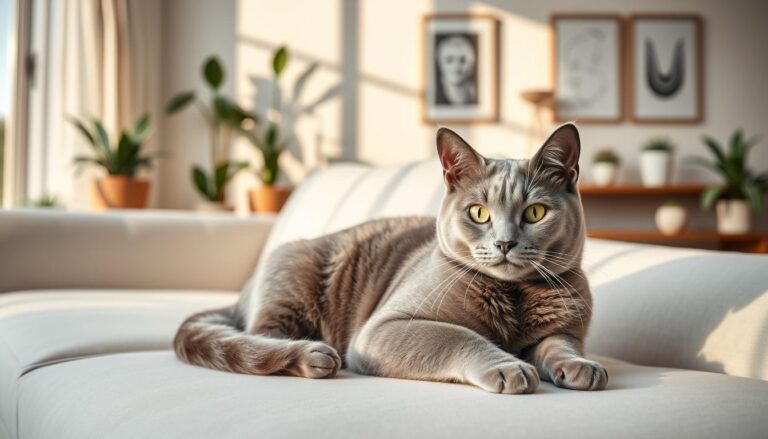
If blue eyes are your favorite feature, Ragdolls, Birmans, and Siamese offer three different combinations of eye shape and coat markings. Blue eyes can stand out against several coat patterns.
Eye color is a striking trait, not a measure of a cat’s personality. Russian Blues and Abyssinians add other eye looks to compare.
| Breed | Eye color or shape | Another distinguishing feature |
|---|---|---|
| Ragdoll | Vivid blue, oval-shaped | Relaxed temperament |
| Birman | Blue | White markings on each paw |
| Siamese | Blue, almond-shaped | Pointed markings |
| Russian Blue | Emerald green | Silver-tipped hairs |
| Abyssinian | Eye color varies | Ticked coat pattern |
Ragdolls have vivid blue, oval-shaped eyes and a relaxed temperament. Birmans pair blue eyes with white markings on each paw. Siamese cats have blue, almond-shaped eyes and pointed markings, creating a different look from either breed.
Russian Blues are known for emerald-green eyes and silver-tipped hairs. Abyssinians add a useful contrast: their ticked coat gives each hair multiple bands of color. Eye shape and color can look different beside each coat.
When you look at a cat, notice how the eyes sit within the face and how their color contrasts with the coat. Two cats with blue eyes can still have very different expressions. Compare the eye shape and the rest of the face together, since color alone will not tell you which expression you prefer.
Which Fluffy Cat Breeds Make the Cuddliest Companions?
For a soft, full-coated look, a Persian offers a flowing coat, while a British Shorthair has a dense, plush one. Coat type can affect both appearance and care.
Long fur can need regular combing, and some breeds need more care than others. A breed’s temperament describes a tendency, not a promise about every cat.
Long, flowing coats
Persians have long, flowing coats and a gentle nature. Their fur needs daily combing to prevent tangles. A Maine Coon also has a long coat, with a different build and a reputation for being intelligent, adaptable, sociable, playful, easy to train, and loyal.
Norwegian Forest Cats and Ragamuffins also have full coats. A Ragamuffin’s coat is described as resistant to mats and tangles, with a comb-out needed once or twice a week. That schedule still calls for regular care, even if the coat is less prone to knots.
Long-haired cats do not all need the same routine. The coat’s texture and the cat’s tolerance for combing can shape how easy grooming feels at home. Ask about an individual cat’s care habits when you meet it.
Dense and plush coats
British Shorthairs have dense coats and a gentle, reserved nature. Their plush look differs from the flowing coat of a Persian. Exotic Shorthairs have a Persian-like appearance with a shorter coat, so they offer a similar outline with less coat length.
“Cuddliest” is not a coat type or a promise of behavior. A gentle breed description can help you picture a companion, but individual cats may seek more or less contact. Observe how a cat responds when you sit nearby.
Think about whether you enjoy combing fur as part of your routine. A cat’s appearance may first draw you in, but coat care continues after that first meeting. Choose a coat you enjoy caring for as well as looking at.
Which Cats Stand Out for Ears, Tails, or Short Legs?
Folded ears, curled ears, bobbed tails, and short legs can make a cat immediately recognizable, but those features do not all carry the same health considerations. Some traits call for extra care in your decision.
Scottish Fold and Munchkin features have health and breeding-ethics concerns. Their distinctive looks should not distract you from the welfare questions attached to them.
| Breed | Distinguishing feature | Relevant qualification |
|---|---|---|
| Scottish Fold | Folded ears | Cartilage and bone development concern |
| American Curl | Ears curl backward | Distinctive ear shape |
| American Bobtail | Shortened tail | Tail is naturally shortened |
| Japanese Bobtail | Bunny-like tail | Short, curved tail |
| Munchkin | Short legs | Mutation raises health and ethics concerns |
Folded or curled ears
Scottish Fold ears fold because of a cartilage mutation. The breed can be predisposed to osteochondrodysplasia, a disorder that affects cartilage and bone development. This concern matters when you consider the feature as more than a visual detail.
American Curls have ears that curl backward. That shape differs from the Scottish Fold’s forward fold. Both features stand out, but they do not mean the same thing for the cat’s health.
Naturally short tails
American Bobtails have shortened tails, while Japanese Bobtails have a bunny-like tail. These cats show how a tail can be a recognizable breed feature without looking alike across breeds. The name alone does not describe the exact shape.
Short legs and the health question
Munchkin cats have short legs because of a genetic mutation. The trait raises health and breeding-ethics concerns. The International Cat Association recognizes the Munchkin, while the Cat Fanciers’ Association does not.
For general education, the site’s cat-care disclaimer explains that online information cannot replace veterinary advice. A veterinarian can discuss a cat’s health, behavior, diet, or safety with you.
Physical features can shape what you notice, but welfare deserves equal weight. Do not choose a cat for a physical trait without considering the welfare implications attached to that trait.
Which Playful, Curly-Coated Cats Suit an Active Home?
A curly coat can make a cat look like a storybook character, while an active personality determines how much interaction you should expect. Daily activity matters as much as appearance.
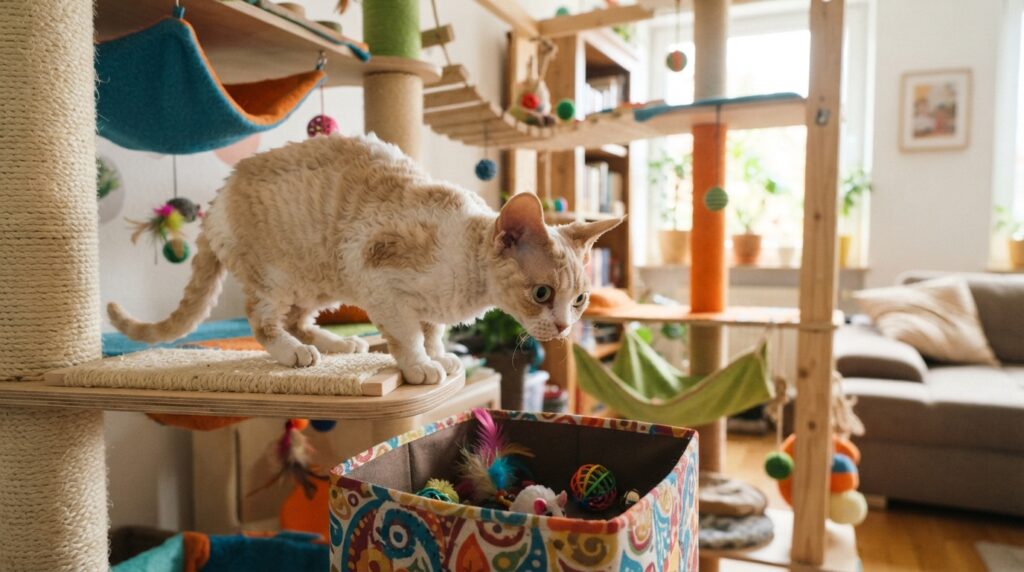
Energetic cats need chances to play, climb, and explore. Devon Rex, Selkirk Rex, and LaPerm cats bring different coat traits to an active home.
Curly coats and curious faces
Devon Rex cats are petite, devoted to people, and have soft, wavy coats. Selkirk Rex cats have curls across the body, including the whiskers, and fuzzy paws. LaPerms have curls and ringlets, along with large eyes.
These coat features can make the breeds look unusual, but they do not tell you how much play a cat wants. Meet the cat and notice whether it seeks contact, watches from a distance, or explores the room.
Energetic, interactive breeds
Abyssinians are active, exceptionally intelligent, and curious. Their ticked coat has multiple bands of color on each hair. Bengals have spotted or marbled coats and an active, playful nature.
A busy cat benefits from a home that offers safe ways to use its energy. Prepare the room and your routine before bringing an energetic companion home.
- Plan interactive play each day.
- Offer climbing or exploration opportunities.
- Keep fragile objects out of reach.
Those simple steps give a cat places to focus its attention and help protect items you value. Pick an energetic breed only if you can make room in your routine for daily engagement.
Which Cat Breeds Fit a Calm or Social Household?
A relaxed Ragdoll may suit someone seeking a peaceful companion, while a curious Maine Coon is described as sociable and playful. Household rhythm can help you decide which traits fit.
Breed descriptions suggest tendencies, not guaranteed behavior in an individual cat. Consider how much interaction your household can offer each day.
Relaxed companions
Ragdolls are described as relaxed and peaceful. That tendency may appeal if you want a calm presence in your home. Still, one Ragdoll may be more active or more reserved than another.
Look at how the cat behaves in its current setting. A quiet cat may need time to adjust, while an outgoing one may approach people quickly. Neither response alone defines the breed.
Curious, people-focused companions
Maine Coons are described as sociable, playful, adaptable, and loyal to their owners. Turkish Angoras are described as intelligent and curious. Abyssinians are active and exceptionally intelligent, which may suit a home that enjoys frequent engagement.
These traits can help you picture daily life with each breed. They do not predict how a specific cat will react to a new home, children, or other pets. Ask about the cat’s behavior around people and animals.
- Quiet homes may prefer a cat with a calmer routine.
- Social homes can plan regular play and attention.
- Curious cats benefit from safe chances to explore.
- Every household should allow time for adjustment.
Think about your normal day, not only the hours when everyone is home. A breed that enjoys interaction may need more attention than your schedule allows. Ask how much interaction you can offer each day before treating a breed’s temperament as a match.
Does an Internet-Famous Cat Like Nala Count as the Cutest?
An individual cat can become someone’s favorite without becoming a measurable winner for every cat lover. Nala’s appeal is personal, like the charm you may see in any cat.
A popular image shows one cat at one moment, not every part of its life. Nala and Snoopy are examples of individual cats mentioned in discussions of online cuteness.
A photo captures one expression or pose. A breed description covers general traits that may appear across many cats. Those are different ways of seeing an animal, and neither tells you everything about a potential companion.
Scottish Folds and Ragdolls are often recognized for distinctive features. A person may prefer one breed’s look, while another person may focus on an individual cat’s markings or expression. An individual’s personality and circumstances matter beyond appearance.
A carefully chosen photo can make a cat look calm, playful, or especially alert. The same animal may act differently in a new place or around new people. What you see online cannot show every part of that cat’s daily behavior.
Let an online favorite introduce you to cats, but judge a potential companion by the individual you meet.
Does Guinness Name a Cutest Cat in the World?
Guinness World Records names a wealthiest cat, not a universal cutest cat. The documented record concerns money, not appearance or personality.
Blackie inherited £7 million ($12.5 million) in 1988. Guinness names Blackie as the wealthiest cat after the inheritance from Ben Rea.
The figure makes Blackie a notable cat in a record book, but it does not create a cuteness title. Wealth and appearance are different measures, and neither can define what every person finds appealing.
People may use a record label to compare facts with a clear measure. Cuteness has no matching shared scale. Your favorite cat may be known to only a few people and still feel special to you.
Keep the distinction clear: a recorded fortune is a record, while cuteness remains a personal judgment.
Is There a World’s Ugliest Cat?
There is no universal standard that can name one cat the world’s ugliest. “Ugliest” is a personal label, not a measure of a cat’s worth.
A breed’s appearance can be distinctive without being objectively ugly. Different features appeal to different people.

A Persian’s round face and long coat create a full, soft outline. A Sphynx has wrinkled skin and a very different look. Neither appearance sets a universal standard for beauty.
A Devon Rex has large ears and a wavy coat, giving it another distinct appearance. Someone who likes bold features may find that look charming, while someone else may prefer a more familiar face.
Words like “ugly” can describe a viewer’s reaction, but they cannot explain what makes a cat unique. Describe the feature you find unusual rather than labeling the cat itself.
Which Cat Breeds Are Rarest?
Khao Manee and Havana Brown are examples of breeds described as relatively rare in the United States. Rarity depends on place and on how a breed is counted.
These examples do not form a verified top-ten list of the rarest breeds worldwide. A breed’s availability in one region may differ from its availability elsewhere.
Breeds described as rare in the United States
Khao Manee cats, also known as White Gems, are described as relatively rare in the United States. Havana Browns are also described as relatively rare. These names offer examples, not a ranking of every breed.
People may call a breed rare because few breeders work with it locally or because few cats appear in a registry. Those measures can point to different answers, even within one country.
Why rarity depends on where you live
Regional availability affects how easy a breed is to find. A breed may be known in one area and hard to find in another. The registry used also affects which breeds count in a comparison.
Before relying on a rarity claim, ask:
- Rare in which country?
- Recognized by which registry?
- Measured by registrations or breeder availability?
The answers help you judge what “rare” means in a particular list. Without a clear method, a global top-ten order can mislead you. Treat any list of ten rare breeds as a regional snapshot unless its ranking method is clear.
How Much Do Expensive Cat Breeds Cost?
Among the named U.S. breeder estimates, Khao Manee cats are listed at $7,000-$11,000, while Maine Coons are listed at $1,000-$3,000. Prices differ by breed and generation.
Savannah cats are estimated at $1,500-$20,000 or more, and early-generation kittens can be offered for $20,000 or more. Price does not measure a cat’s appeal or value as a companion.
Approximate U.S. breeder price ranges
| Breed | Approximate U.S. breeder estimate |
|---|---|
| Khao Manee | $7,000-$11,000 |
| Sphynx | $1,500-$6,000 |
| Bengal | $1,000-$5,000 |
| Persian | $1,000-$5,000 |
| Maine Coon | $1,000-$3,000 |
These are approximate U.S. breeder estimates, not a promise that every kitten will cost the same. Breed and generation can affect the stated price, particularly for Savannah cats.
Claims that need careful interpretation
The Ashera was advertised at $75,000-$125,000. That figure was an asking price, not proof of a completed sale. Major cat registries do not recognize the Ashera as a distinct breed.
DNA testing identified cats marketed as Asheras as Savannah cats. This test result changes how you should read the advertised name and price. DNA testing of marketed Asheras found they were Savannah cats.
A high asking price can attract attention, but it does not confirm that a buyer paid that amount. Compare the stated breed and generation carefully, and do not treat an advertised asking price as proof of a completed sale.
How Can You Choose a Cute Cat That Fits Your Life?
Choose for the daily life you can offer, not only for the face or coat that first catches your eye. Your routine shapes what kind of companion may fit well.
Meet an individual cat, since breed tendencies do not guarantee its personality. Think about activity, attention, coat care, and the people or pets in your home.
Match energy and attention needs
Maine Coons are described as adaptable, sociable, playful, and loyal. Ragdolls are described as relaxed and peaceful. Persians are described as gentle and serene, while Abyssinians are active, intelligent, and curious.
Those tendencies can help you picture a day together. An active cat may suit someone who enjoys frequent play. A more relaxed cat may fit a quieter routine, though individual behavior can differ from the breed description.
Think about how much time you can give a cat when you are home. Regular interaction takes time, and a cat’s needs continue beyond the first weeks. A household with children or pets should also consider how the cat responds to them.
Consider coat care and household fit
Coat length and texture affect the care a cat may need. Consider whether regular brushing fits your schedule, especially if you have not cared for a long-coated cat before. A good match should work with your daily routine.
Before deciding, check these points:
- Your preferred activity level
- Time available for interaction
- Your tolerance for grooming
- Compatibility with household members or pets
Use breed traits as a starting point, then learn how the individual behaves. A shelter or responsible breeder can share observations about a cat’s temperament. General cat-care information is not a substitute for veterinary advice; contact a veterinarian about health or safety concerns.
Choose the companion whose needs fit the care and attention you can offer every day.
Meet the individual cat and ask a shelter or responsible breeder about its observed personality before deciding.
Conclusion
The cutest cat for you is the one whose look and personality feel right in your everyday life. A breed’s features may catch your eye, but the cat’s nature and care needs matter just as much.
Notice what you enjoy, then consider whether your home and schedule suit that companion. A good fit can make ordinary moments together feel special.
Make a shortlist, meet the cat, and choose the companion you can care for well.