Cute Cat Breeds: Adorable Cats to Know
A soft coat, a striking gaze, or a playful habit can make a cat irresistible to you. Cute cat breeds offer many kinds of charm, from fluffy fur to unusual ears and lively personalities. A ticked coat has bands of different color on each hair, creating a subtly flecked appearance.
Choosing a cat is about more than loving a photo or a particular look. Your lifestyle, household fit, and hopes for pet companionship all shape which cat may feel right at home. A breed’s reputation can offer a useful starting point, but it cannot promise how one individual cat will behave.
You deserve a choice that feels good after the first meeting, too. This overview helps you connect appearance with daily needs, so you can make a thoughtful shortlist. The right match is the one whose care needs and temperament fit your everyday life.
Key Takeaways
- Let a breed’s appearance draw you in, then learn about its usual needs.
- Compare activity, companionship, grooming, and your household routine.
- Long fur, blue eyes, and unique ears do not predict a cat’s temperament.
- Ask about an individual cat’s health, behavior, and past care.
- Choose a cat whose daily needs you can meet for years.
How Do You Choose Cute Cat Breeds for Your Home?
Start by deciding whether you want an energetic playmate, a quieter companion, or a balance of both. A good shortlist weighs your real routine, not just the look that first caught your eye.
Compare activity level, desired companionship, coat upkeep, and the rhythm of your household. Burmese and Siamese cats are often described as highly interactive, while British Shorthairs are often described as calmer. Those breed tendencies are not promises about an individual cat.
Let the individual cat’s temperament and socialization matter more than a breed label alone.
Burmese cats are often people-oriented and playful, so they may enjoy plenty of shared time. Siamese cats are often social, intelligent, and talkative, which may suit you if you enjoy an engaged companion.
British Shorthairs are often described as calm and easygoing. That description can help you frame questions, but it cannot tell you how a particular cat will act with your family or other pets.
Your work hours, home noise, and time for play all shape the match. A cat that needs more interaction may struggle if everyone is away for long stretches.
Ask about the cat’s behavior around people, its comfort with handling, and its usual activity. Make your shortlist around the time and attention you can reliably offer.
What Are the Top 10 Cutest Cat Breeds to Know?
No objective contest can settle the cutest cat, but these ten breeds offer a varied place to start. These distinctive looks give you a way to explore, not an official ranking of charm.
Some stand out for plush coats and round faces; others catch your eye with vivid patterns or unusual features. “Cutest” is personal, so treat each pick as a starting point.
Plush coats and gentle-looking faces
Maine Coons are known for tufted ears and bushy tails, while Ragdolls draw notice with blue eyes and semi-long fur. The Persian cat’s long coat and round face give it a soft, full look.
- Maine Coon: tufted ears and a long, bushy tail.
- Ragdoll: bright blue eyes and semi-long fur.
- Persian: a round face framed by a long coat.
- Exotic Shorthair: plush fur and a round face.
- British Shorthair: a dense coat and rounded features.
Exotic Shorthairs have the plush look of a short, thick coat. British Shorthairs combine a dense coat with a round face, giving them a sturdy, soft-edged appearance.
Distinctive patterns and striking expressions
Bengals are known for spotted or marbled coats, and Birmans pair blue eyes with white feet. Siamese cats have a sleek, color-pointed look and vivid eyes.
- Bengal: bold spots or marbled markings.
- Birman: blue eyes, white feet, and silky fur.
- Siamese: blue eyes and a sleek, color-pointed coat.
- Sphynx: large ears and a hairless appearance.
- Norwegian Forest Cat: a thick coat and a full tail.
The fluffiest cute cat breeds include long-coated choices such as the Persian, Ragdoll, and Norwegian Forest Cat. Consider grooming needs separately from appearance, since long fur can bring more care.
Each breed has its own look, but an individual cat’s face or expression can be just as memorable. Treat the shortlist as inspiration, then compare each cat’s daily needs with your own routine.
Which Fluffy Breeds Make Affectionate Companions?
A Ragdoll can continue growing for years, so its adult size is not a kitten-stage preview. This slow growth matters if you are picturing the space a mature cat will need.
A Ragdoll typically weighs 10-20 pounds and can take up to four years to reach full size. Adults stand around 9-11 inches tall and measure 17-21 inches long, excluding the tail. Plan for a large adult cat, not the small kitten you first meet.
Ragdolls have a semi-long coat and are commonly described as relaxed and affectionate. Their soft fur and gentle expression may appeal to you, but a cat’s own behavior still matters.
Maine Coons have a large build, tufted ears, and bushy tails. Norwegian Forest Cats have thick coats and can weigh 9-16 pounds, with a listed lifespan of 15-20 years.
These breeds differ in coat, fur length, and body shape. A long tail also takes up room when a cat turns around on a perch or curls up beside you.
Ask how a young cat behaves during play and rest, since those moments can show you more than a still photo. A kitten’s current size may not make its adult build obvious.
The measurements for a Ragdoll exclude its tail, so allow extra room for its full outline. Make room for a large cat’s full adult body and climbing or resting spots.
General cat-care information cannot replace veterinary advice about an individual cat’s health or needs.
Which Cute Cat Breeds Stay Small?
If an adult cat’s compact size matters to you, compare adult weights rather than relying on kitten appearance. Adult size gives you a better basis for planning than a kitten’s small body.
The Singapura is a naturally occurring domestic cat breed and weighs 4-8 pounds as an adult. Toybobs typically weigh 3-7 pounds, while Devon Rex cats usually weigh 6-9 pounds. Small does not automatically mean low-energy or low-maintenance.
| Breed | Typical adult weight | Standout feature |
|---|---|---|
| Singapura | 4-8 pounds | Naturally occurring breed |
| Toybob | 3-7 pounds | Small adult size |
| Devon Rex | 6-9 pounds | Curly coat |
| Japanese Bobtail | 5-10 pounds | Bobbed tail |
| American Curl | 5-10 pounds | Curled-back ears |
The Japanese Bobtail and American Curl each typically weigh 5-10 pounds as adults. Their compact size comes with different standout traits, from a bobbed tail to ears that curl backward.
Other breeds may also stay on the smaller side. Turkish Angoras usually weigh 6-9 pounds, and Cornish Rex cats usually weigh 6-10 pounds as adults.
Adult weight is only one part of a cat’s daily needs. A lively small cat may still need play, company, and room to explore your home.
Notice how a cat walks, jumps, and engages with toys when you meet it. Ask how a particular cat moves and plays, not only how much it weighs.
Practical cat-care information can help you think through daily needs, but a veterinarian can guide health questions.
Which Breeds Have Striking Eyes, Faces, or Coats?
A cat’s eyes and coat pattern can be just as distinctive as its silhouette. Color and pattern help set these breeds apart, but looks alone tell only part of the story.
Birmans are known for blue eyes, white feet, and silky fur. Siamese cats have blue almond-shaped eyes and a sleek, color-pointed appearance. Eye color and coat markings do not guarantee a particular personality or easy care.
Bengal coats can be spotted or marbled, with patterns that make each cat visually striking. The Sphynx has no fur coat, along with large ears and a wrinkled appearance.
These features can make a cat easy to recognize across a room. The Birman’s white feet contrast with its silky coat, while the Siamese cat’s points add contrast to its body.
Blue eyes occur with different coat patterns, so do not assume one eye color signals one type of cat. A cat’s face can also change as it grows.
Ask about temperament and care as well as appearance when meeting a cat. The coat and eyes you admire do not tell you how it responds to handling or daily life.
Choose a look you enjoy while checking the care needs that come with it.
Which Cats Stand Out for Their Ears, Tails, or Curls?
Some breeds are recognizable before you notice their coat color, thanks to one standout feature. Their distinctive outlines can make them easy to spot in the cat world.
The American Curl has ears that curve backward, while the Scottish Fold has folded ears. An American Bobtail’s tail can vary from 1-4 inches long. A feature that stands out visually deserves questions about care and health, too.
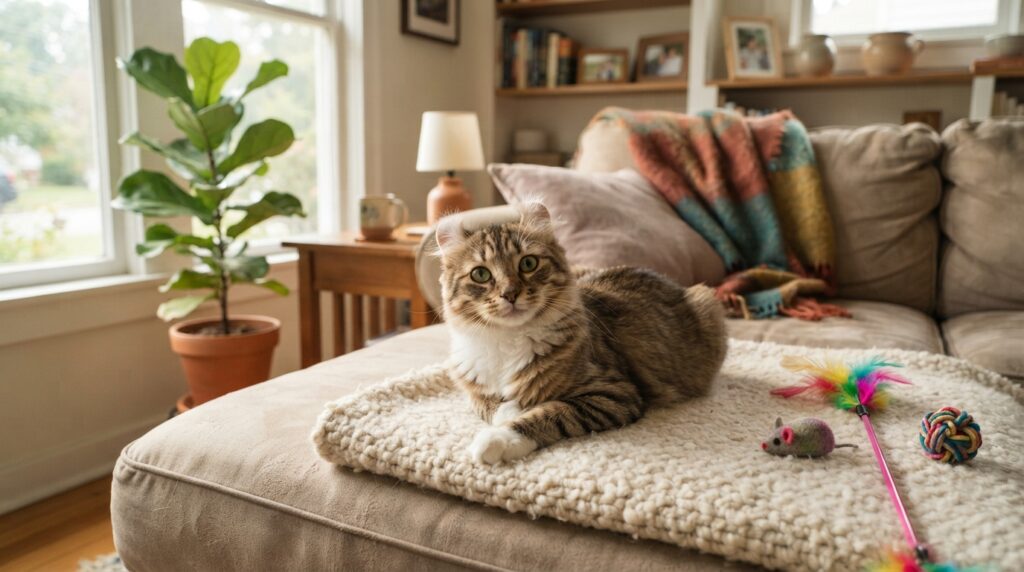
- Curled-back ears: American Curl.
- Folded ears: Scottish Fold.
- Short, bobbed tail: American Bobtail.
- Soft curls or natural waves: Selkirk Rex or LaPerm.
Selkirk Rex cats have soft curls across the body, including their whiskers. LaPerm cats have naturally wavy coats, a different texture from the Selkirk Rex’s curls.
Those ear, tail, and coat traits create striking shapes. Ask what care each feature may need, and learn whether it has health implications.
Do not judge a cat’s well-being from its unusual look alone. Ask a breeder or rescue what health checks are relevant to the specific trait you admire.
How Do Popularity Lists Rank Cat Breeds?
A breed can top one popularity list and rank differently in another because the lists measure different things. Rankings are not the same as a measure of charm or household fit.
The Cat Fanciers’ Association ranks popular pedigreed breeds. YouGov’s U.S. ratings are a different kind of measure, so the two lists can give breeds different places. A rank shows popularity within its own measure, not an objective cuteness score.
In the Cat Fanciers’ Association’s 2026 list, the Maine Coon ranked No. 1 for the second year in a row. Ragdoll placed No. 2, Persian No. 3, and Exotic No. 4.
YouGov’s third-quarter 2026 U.S. ratings placed Siberian first, Bengal second, and Himalayan third. The difference reflects distinct ranking methods, not a shared standard for the best cat.
| Breed | CFA 2026 rank | YouGov U.S. 2026 rank |
|---|---|---|
| Siberian | No. 8 | No. 1 |
| American Shorthair | No. 9 | No. 4 |
| Maine Coon | No. 1 | No. 5 |
| British Shorthair | No. 7 | No. 9 |
| Exotic | No. 4 | Not listed in supplied top ten |
The YouGov top ten also includes Savannah, European Shorthair, Napoleon Cat, and American Wirehair. The Cat Fanciers’ Association list includes Devon Rex, Abyssinian, and Russian Blue in its top ten.
Popularity can help you discover breeds you may not know. It cannot show whether a cat’s needs match your home or whether you will enjoy its personality.
Use rankings to discover breeds, not to decide which individual cat belongs in your home.
Which Cat Breeds Suit Families and First-Time Owners?
The best cat breeds for your family are the ones whose needs match your household’s daily rhythm. Daily interaction can matter as much as a breed’s reputation.
Maine Coons are commonly described as friendly and social, while Abyssinians are often described as playful and athletic. Choose based on the individual cat, your children’s ages, other pets, and time at home.
Social cats for active households
Maine Coons and Abyssinians may suit households that can offer play and attention. Their social or active tendencies may appeal if you want a cat involved in daily home life.
Children need respectful, supervised interactions with any cat. Teach them to give a cat space and let an adult guide contact, especially during a first meeting.
Calmer companions for a quieter routine
British Shorthairs are commonly described as calm and easygoing. Birmans are often described as gentle and social, which may fit a calmer or balanced household routine.
These descriptions are starting points, not promises. A cat’s past experiences and comfort with people can shape how it acts in a new home.
Introduce a cat to other pets gradually, giving each animal time to adjust. Watch their behavior rather than expecting an instant friendship.
First-time owners may value clear care guidance and a cat whose needs fit their available time. The best cat breed for your household depends on the individual cat, the ages of children, other pets, and the time you are home.
Ask how a cat behaves around people and other animals, then meet it in a calm setting. General advice about cat behavior does not replace guidance for a specific pet. Arrange a calm, supervised meeting before you decide that a cat’s temperament fits your family.
How Much Grooming Do Different Cat Coats Need?
A long coat does not always require the same brushing schedule as another long coat. Coat texture and shedding help shape the routine you will need to keep up with.
Ragdolls have a sparse undercoat, which can mean less matting and tangling than in many long-haired breeds. Brush weekly, or every few days during spring and summer shedding.

Long coats and seasonal shedding
Persian coats need frequent combing, while Himalayan coats benefit from daily brushing and combing. Norwegian Forest Cats may need extra grooming during seasonal shedding, especially in spring.
| Breed | Coat-care need | Brushing guidance or trigger |
|---|---|---|
| Ragdoll | Sparse undercoat | Weekly, or every few days in spring and summer shedding |
| Persian | Long coat | Frequent combing |
| Himalayan | Long coat | Daily brushing and combing |
| Norwegian Forest Cat | Thick double coat | Extra grooming in seasonal shedding, especially spring |
| Siberian | Dense multi-layered coat | Regular grooming, with extra brushing during heavier shedding |
Short or curly coats and regular checks
Siberian cats need regular grooming, with more brushing during heavier shedding. A cat’s coat length and shedding can change how much time you spend on care.
Check for tangles and loose fur as part of routine handling, even when a coat looks smooth. Your cat’s tolerance for grooming also affects how the routine works at home.
Let your cat get used to the brush in brief, calm sessions. Keep a comb or brush routine gentle and stop if your cat shows discomfort.
What Health and Welfare Issues Should You Consider?
A distinctive body shape deserves a health discussion before it becomes a reason to choose a pet. The Munchkin’s short legs result from a natural genetic mutation. That trait merits careful thought before you make a choice.
Munchkins can be predisposed to osteoarthritis and mobility issues. They can also develop lordosis, an inward curve of the lower spine that may cause pain and reduced movement. A cat’s appearance does not prove that it is healthy.
Munchkins may develop pectus excavatum, a chest-wall defect. Severe cases can lead to heart and breathing problems, so ask a veterinarian what the trait may mean for one cat.
- Mobility and osteoarthritis.
- Spinal curvature, including lordosis.
- Chest-wall development, including pectus excavatum.
A Munchkin’s typical lifespan is around 12-15 years, though that range cannot predict an individual cat’s life. You can also watch for changes in movement as a cat ages.
Stiffness, reduced activity, trouble using stairs or the litter box, and difficulty grooming can signal joint pain. The Cornell Feline Health Center’s joint disorder guidance describes these signs.
Biggy Paws offers educational cat-care content, not veterinary advice. Ask a veterinarian to discuss the risks for the individual cat before you commit.
How Can You Adopt or Choose a Responsible Breeder?
A responsible adoption or breeder conversation should make the cat’s health and daily needs clear before you take it home. Good questions help you understand the commitment before you decide.
Cute cat breeds may be available through rescue or responsible breeders. Ask about health history, veterinary records, temperament, and the cat’s day-to-day care needs. Adoption fees and included services differ between rescues.
Do not take a cat home until you understand its health records and daily care needs.
Specialty Purebred Cat Rescue lists adoption fees of $75-$175 for domestic cats, $125-$250 for purebred mix cats, $150-$500 for purebred cats, and $300-$600 for rare-breed purebred cats. Its fee includes spay or neuter surgery, feline leukemia and FIV testing, distemper vaccination, microchipping, deworming, flea treatment, grooming, and temperament testing.
Many cats also receive full dental cleanings through that rescue. Other rescues may set different fees and offer different services, so confirm the details for the cat you are considering.
For kittens, ask about early vaccinations, nutrition, litter training, and gentle socialization. A responsible breeder should also explain health checks, pedigree, and the care given to young cats.
- Review the cat’s medical records.
- Ask about temperament and socialization.
- Confirm what the adoption fee covers.
- Prepare food, litter, and a quiet settling-in space.
The Cat Fanciers’ Association offers breeder guidance on pedigree, health, and socialization. Bring home the records and care instructions you will need for the first veterinary visit.
Conclusion
A memorable look can start your search, but a good match also fits your everyday routine. The best companion balances an appearance you love with a temperament and care routine you can support.
Take a concrete next step by arranging a conversation or visit with a reputable rescue or responsible breeder. Prepare questions about health and behavior, and listen closely to what you learn about the individual cat.
Choose the individual cat whose needs you can meet for the long term.