Cats That Don’t Shed: Low-Shedding Breeds
A dark sweater that comes out of the dryer covered in pale hair is the everyday problem behind the search for cats that don’t shed. No cat is completely shed-free. Still, several breeds shed far less than a typical cat.
This guide covers three groups: hairless breeds, curly rex breeds, and coated breeds that shed lightly. Most people pick these cats for two reasons: fewer hairs on furniture and milder allergy symptoms. Low shedding does not mean allergy-free, so keep that in mind as you read.
Decide first how much weekly grooming you will realistically do, because every breed here needs some.
Table of Contents
Why Cats That Dont Shed Still Lose Some Hair
A cat’s coat is the first thing to check, because shedding depends on how the hair grows and how well it holds on. Cats that dont shed still lose hair, but far less than most cats. The structure of the coat decides how much loose hair reaches your furniture.
The undercoat is the short, soft layer of hair beneath the outer coat that holds loose hair close to the body. When the undercoat is thick, loose hair stays trapped until you brush it out. Coat type sets the amount of hair you find at home.
| Breed | Coat | Why it sheds less |
|---|---|---|
| Devon Rex | Soft, wavy, short down | Fine hair with few guard hairs holds loose hair close |
| Cornish Rex | Very short, curly, lies close to the body | No topcoat, so hair stays near the skin |
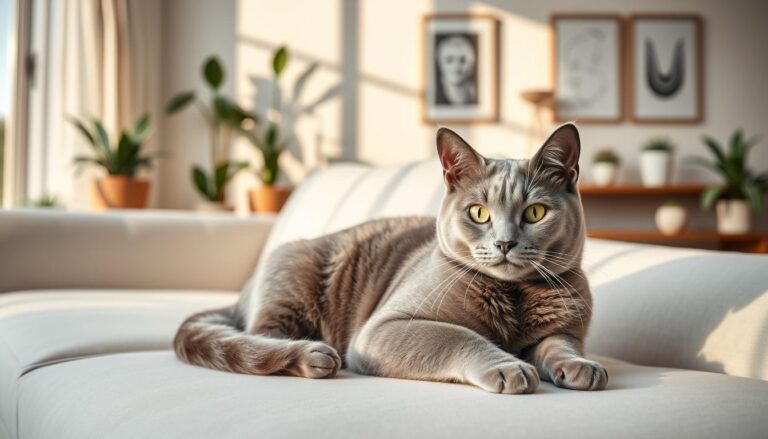
| Russian Blue | Short, dense double coat | Undercoat traps loose hair near the body |
| Siamese | Short, glossy, fine | Close-lying coat releases little loose hair |
A single short coat releases fewer loose hairs than a long double coat.
The Devon Rex is a good example. These cats shed dramatically less than most breeds, because their fine coat gives loose hair very little to hold onto. The Russian Blue sits in the middle, since its dense undercoat holds hair in until a seasonal release.
Shedding drops with coat type but never reaches zero, so every household still needs a cleaning routine.
Hairless Breeds That Barely Shed
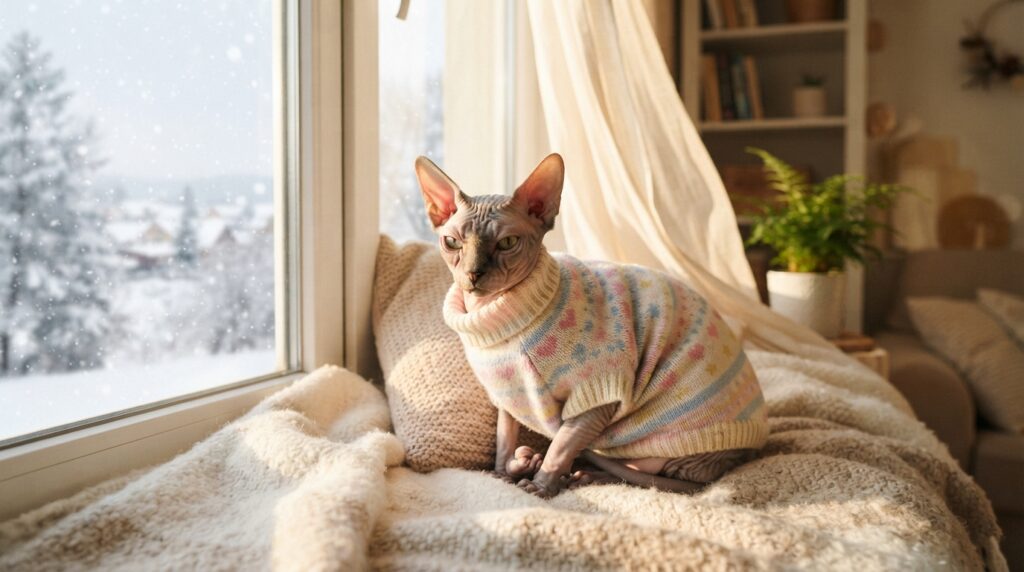
Hairless breeds shed the least of any group in this guide, but they still need regular care. A hairless cat still has a coat, which is why the Sphynx is the most common pick in this group. Barely is the right word, because the skin of these cats needs attention every week.
Hairless cats are susceptible to sunburn and have more trouble regulating body temperature than furred cats. They may need sun protection, cooling mats in summer and sweaters in winter. Skin care is the real cost of a hairless breed.
Sphynx: Fine Fur on a Hairless Body
The Sphynx is covered in fine fur even though it looks hairless. That fine layer is hard to see, so many owners think the breed has no coat at all. The Bambino is a Sphynx-Munchkin cross that is typically hairless with shorter legs.
Peterbald: Bare or Fuzzy Coat Choices
The Peterbald has two parent breeds: the Oriental Shorthair and the Donskoy. It has large, bat-like ears that stand out on its slim face. Peterbald cats can be completely bare or have fuzzy, curly, wiry, short or long coats. All Peterbald coat varieties are low-shedding.
Donskoy: Four Coat Types to Compare
The Donskoy comes in four coat types, from completely hairless to a soft, wavy coat. You can pick the look you like best, and the coat type will change how much care the skin needs. This breed is sociable and enjoys attention, so it often follows you from room to room.
Plan for a cool sleeping spot and a sun-safe window in every season, since hairless skin sunburns and loses heat quickly.
Rex Breeds With Short, Curly Coats
The Devon Rex and Cornish Rex are the usual answer for small cats that don’t shed much. Both breeds have a short, curly coat that lies close to the body. Because the coat is so short, these cats rarely leave hair behind.
The Devon Rex weighs 6 to 9 pounds on average as an adult. It also ranked fifth among the most popular pedigreed cat breeds for 2026. The Cornish Rex typically stays under nine pounds as an adult. The Singapura is the smallest breed, with a short coat that sheds lightly to moderately.

- Cold tolerance: the Cornish Rex has less insulation than most breeds and needs warm resting spots.
- Oily coat: the Cornish Rex skin gets oily faster and needs occasional wiping.
- Attention: the Devon Rex bonds closely and wants to be near you, which can mean more hair and saliva on your clothes.
- Play: both rex breeds are playful and treat grooming as a game.
The rex coat has no guard hairs, so it does not need frequent combing. Choose a rex only after you check whether your home stays warm enough in winter.
Coated Breeds That Shed Lightly
A Russian Blue sheds in one short burst each year, not in a steady trickle. The breed generally sheds over a two- to three-week period, once or twice a year. Its dense double coat holds loose hair in place until that burst comes.
The Birman is a relatively low-shedding breed with a non-matting coat that needs minimal grooming. The Burmese has a short, fine coat that naturally carries less hair. Big cats that don’t shed exist too, and the Bengal is one example of a large breed with a light coat.
Russian Blue: Seasonal Shedding in a Dense Coat
The Russian Blue’s seasonal shedding is the main thing to plan for. During the burst, loose hair can cover clothing and upholstery quickly. Outside that window, the breed leaves much less hair than most cats.
Bengal: Sleek Pelt for an Active Home
The Bengal is among the largest cat breeds, yet it has a short coat that sheds minimally. A large, active cat can still shed little, since its coat is tight and short. Many owners with busy homes choose the Bengal for that reason.
Siamese and Oriental Shorthair: Fine, Close-Lying Coats
The Siamese has a colorpoint pattern in seal, chocolate, blue and lilac. Its fine coat lies flat and releases little loose hair. The Oriental Shorthair comes in more than 300 colors and patterns, and its close coat sheds lightly as well.
Plan the Russian Blue’s shedding window for when you least want hair on your clothes, since its burst lasts a few weeks.
Do Low-Shedding Cats Trigger Allergies?
No, cats that don’t shed are not hypoallergenic. Fewer hairs to clean does not mean fewer allergens in the air you breathe. The main allergen is the protein Fel d 1, and it spreads through saliva and dander, not only through hair.
Fel d 1 is made in the skin’s sebaceous glands and appears in saliva, dander and urine. No cat is truly hypoallergenic, since allergens are present regardless of fur length. Neutered males produce lower Fel d 1 levels than intact males, though individual cats vary widely.
Hairless breeds such as the Sphynx produce the protein at levels comparable to coated cats. A child or a person with asthma needs medical advice before any adoption.
- Spend time with the breed before you commit, since reactions differ by cat.
- See an allergist about antihistamines or intranasal steroid sprays.
- Wash your hands after petting or playing with your cat.
- Run an air purifier in the room where the cat sleeps.
- Ask the breeder or shelter whether the cat is neutered, since neutered males usually produce less Fel d 1.
Test your reaction with the actual breed before you bring the cat home, because allergen levels differ from cat to cat.
Grooming Low-Shedding Cats
A Sphynx is bathed every one to two weeks, while a single-coated furred breed needs a brush once a week. The Russian Blue’s double coat is brushed twice a week. Frequent baths can dry a hairless cat’s skin, so ask a veterinarian for a routine.
Grooming is not optional on these breeds, even though they shed less. The skin, ears and nails each need their own check. A vet can help you set a schedule that fits your cat’s skin type and your time.
Bathing a Sphynx
Bathe the Sphynx every one to two weeks with lukewarm water and a gentle cat shampoo. The shampoo removes oil buildup that would otherwise sit on the skin. Pat the skin dry, and clean the skin folds so moisture does not cause irritation.
For a cat with dry skin, a veterinarian may suggest wipe-downs or occasional baths with special shampoos instead.
Ears and Nails on Hairless Cats
Hairless cats need more frequent ear and nail cleaning because wax and oil build up on the skin. Clean the ears weekly. Trim the nails about every two weeks, and check the paws for dirt or oil at the same time.
Set a fixed grooming day each week in your calendar, since missed sessions show quickly on a hairless cat’s skin.
Keeping Hair Off Your Furniture
Start with the surfaces where loose hair collects fastest, which is usually the sofa and the bed. Indoor cats that don’t shed still leave hair on furniture, so they need regular vacuuming. Clean the same areas on a set schedule so hair does not build up in the fabric.
Brush a coated cat once or twice a week, or daily in warmer months, to catch hair before it reaches the couch. Vacuum fabric furniture every week, since loose hairs sink into the weave. Clean the surface the same day you see hair, because it spreads fastest on soft fabric.
| Tool | Best surface | Why it works |
|---|---|---|
| Lint roller | Clothing and upholstery | Lifts loose hair in one pass |
| Damp dust mop | Hard floors and ledges | A damp cloth traps hair instead of pushing it around |
| Rubber glove | Fabric-covered furniture | Static lifts hair from the surface |
| Pet hair vacuum with HEPA filter | Carpets and furniture | Strong suction and brushes that resist tangles, with a HEPA filter for fine particles |
- Skip shaving, even in summer, since fur helps regulate body temperature.
- Tumble soft items with a dryer sheet and clean the lint trap afterward.
- Keep the bedroom cat-free to reduce nighttime exposure.
- Wash bedding and furniture covers every week.
Keep the lint roller next to the front door so you can clear clothing before you sit down.
Conclusion
The hairless and rex breeds shed the least, but they need skin and coat care that never stops. Coated breeds like the Russian Blue shed lightly, though they still leave some hair around the home.
No breed is shed-free or allergy-free. The best match is the breed whose care you can keep up, not the one with the shortest coat. Write the weekly grooming time into your calendar before you bring a cat home.