Can Cats Have Rice? Safety and Serving Tips
A small bite of plain cooked rice is generally safe for most healthy adult cats, but it is not something they need in their bowl. You might share a meal and wonder if that little taste is harmless. Rice is not a natural part of a cat’s diet, and it offers little that supports feline health. Still, a curious cat may sneak a few grains, so it helps to know what matters.
This guide explains safe preparation, sensible portions, rice varieties, and when vomiting or other stomach signs call for veterinary guidance. It also shows why an occasional bite differs from food your cat depends on each day. Keep your cat’s regular, complete food at the center of every meal.
Key Takeaways
- Plain cooked rice is generally safe in a small taste for a healthy adult cat.
- Rice is not a necessary or nutritionally valuable meal for cats.
- Plain white rice is usually easier to digest than brown rice.
- Do not add salt, sauces, or seasonings, especially onion or garlic.
- Ask your veterinarian before using rice for stomach symptoms or a health condition.
Can Cats Have Rice?
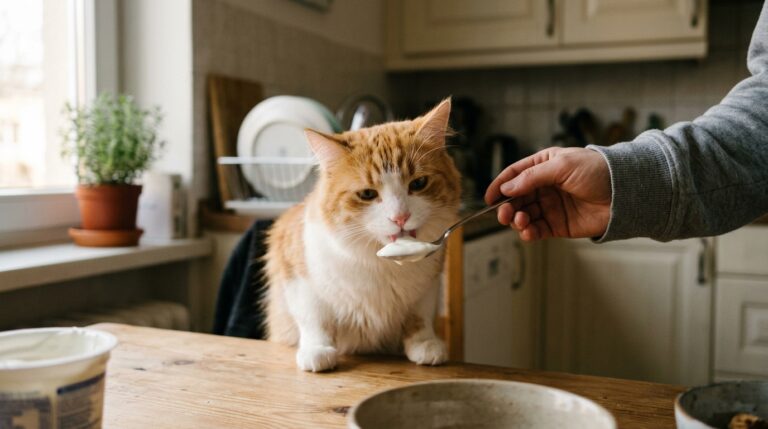
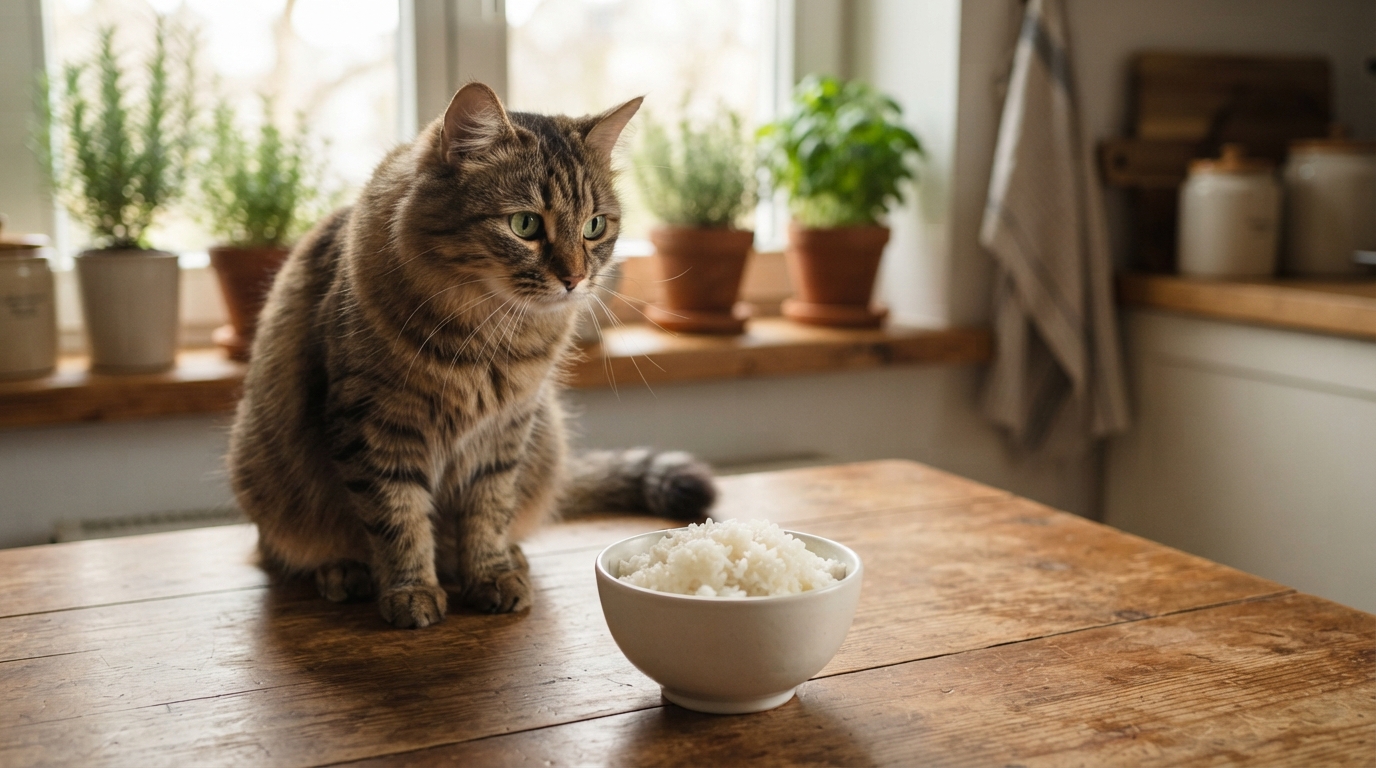
A few grains of plain, cooked rice are generally safe for a healthy adult cat. Plain matters: rice with added ingredients can pose risks that a simple taste does not. An accidental nibble is not usually a reason to panic.
Rice is non-toxic in small amounts, but it offers cats no essential nutrition. That difference matters. A food can be safe to taste without being useful as part of a cat’s diet.
A small plain taste is different from a meal; rice should not become your cat’s regular food.
Cats are obligate carnivores, and their bodies need nutrients found in animal tissues. Rice cannot meet those needs. A cat that eats rice instead of proper food could miss nutrients needed for health.
Some cats may not enjoy the texture or taste. Others may have sensitive stomachs and feel unwell after eating a new food. Watch your cat’s response if they get an accidental bite, and contact a veterinarian if concerning signs appear.
If your cat ate a small plain bite and seems well, return to their usual food rather than offering more.
Does Rice Give Cats Any Nutritional Benefits?
Cats are obligate carnivores, so rice cannot provide the nutrients they need from a properly balanced diet. An obligate carnivore is an animal whose nutritional requirements depend on nutrients naturally found in animal tissues. That need shapes what belongs in your cat’s everyday food.
Rice provides carbohydrates, but it does not supply adequate taurine or the full range of nutrients cats need. Taurine is an essential nutrient for cats. Rice cannot take the place of animal-based nutrition.
Why rice does not meet a cat’s nutritional needs
Rice is mostly a source of carbs, not a source of the nutrients that make a cat’s diet complete. Cats need nutrients such as protein, fat, vitamins, minerals, and taurine in the right amounts. The balance matters as much as the presence of any one nutrient.
Meat and other animal tissues provide nutrients that rice lacks. Rice might fill space in a bowl, but it cannot supply a cat’s full nutritional needs. A little rice is not a meaningful nutritional benefit.
Extra calories from carbohydrates can also make it easier for a cat to gain weight. Too much weight can raise the risk of health problems, including diabetes. A cat’s full daily intake matters, not just the food served at one meal.
The Merck Veterinary Manual’s nutrient overview explains cats’ specific needs, including taurine. It also notes that adult cats do not require dietary carbohydrates.
Rice as an ingredient in commercial cat food
Rice can appear as a measured ingredient in commercial cat food. A food maker may use it as one part of a recipe that includes other ingredients and meets cats’ nutrient needs. Its presence does not make rice a useful stand-alone meal.
That is why the ingredient list alone does not tell you whether a food meets your cat’s needs. The full recipe and its nutrient balance matter. Rice in a formulated food has a different role from a bowl of rice at home.
Treat rice in a food ingredient list as one component of a formulated meal, not proof that a bowl of rice is a complete meal.
How Much Rice Can Cats Eat?
For an occasional addition to a healthy adult cat’s usual food, keep the serving to about 2 teaspoons of cooked white rice. Occasional is the key: rice should not take the place of food your cat needs each day.
Offer rice no more than once in a few days, and keep all treats under 10% of daily calories. A guide suggests about 2 teaspoons as an occasional addition, not a dose for every cat. Your cat’s health and daily food intake affect what fits.
A small occasional serving
A teaspoon-sized serving may look modest, but even a small extra adds calories. Use the rice as a little topper rather than a separate dish. If your cat has diabetes, weight concerns, or another health issue, ask your veterinarian before offering new foods.
Do not feed rice every day. Cats can eat rice every day in the literal sense, but making it a daily treat adds food without a needed nutritional benefit. If your cat likes rice, space out those tastes instead of building them into a routine.
Rice is only one possible extra. You can read about other options, such as occasional watermelon for cats, but treats should not crowd out a balanced diet.
Keep treats within the daily calorie limit
Treat calories include every extra your cat eats, not only rice. A small serving can use up part of the day’s treat allowance, especially when your cat also gets cat treats or table scraps. Keep the whole day in view.
These three checks can help you keep an occasional serving sensible:
- Keep the rice portion small.
- Count it among all daily treats.
- Stop offering it if it causes digestive upset.
If you are also tracking treat calories, sugary snacks such as caramel popcorn do not offer a better choice for your cat.
Do not make rice a daily treat, even if your cat likes it.
Can Rice Help a Cat With an Upset Stomach?
Plain, fully cooked white rice can be included in a bland diet when a veterinarian recommends it for a cat with gastrointestinal signs. Veterinarian-directed is important because vomiting or diarrhea can have causes rice will not treat.
Do not start a bland diet on your own or use it as a long-term food plan. A handout for gastrointestinal issues describes short-term directions that differ from a snack serving. Your veterinarian can decide whether that plan fits your cat.
When a veterinarian may recommend a bland diet
A veterinarian may recommend a bland diet for a cat with signs such as vomiting or diarrhea. The goal is to use a simple short-term plan while your cat recovers. It is not a general fix for every upset stomach.
Vomiting and diarrhea can stem from many causes, and rice will not address all of them. Your cat may need an exam or other care, especially if signs worsen or persist. Follow your veterinarian’s directions for food and follow-up.
One set of short-term directions gives 1-2 tablespoons every 4 to 6 hours. Those bland-diet portions and timing are not ordinary treat advice, and you should use them only under veterinary guidance.
How a chicken-and-rice recipe is prepared
A chicken-and-rice recipe in those directions uses 1 cup of boiled chicken and 1 cup of cooked white rice. The chicken and rice are simple ingredients, but the recipe is still meant for short-term use. Do not treat it as a complete everyday meal.
Prepare the rice without other ingredients, then let it cool before serving. These steps keep the food plain and make it easier to follow the vet’s plan:
- Cook the rice plain.
- Cool it to room temperature.
- Follow the veterinarian’s portion and schedule.
Contact your veterinarian rather than extending a bland diet if your cat’s symptoms continue or worsen.
Which Rice Preparations and Add-Ins Should Cats Avoid?
Rice should be cooked in plain water, with no salt, oil, butter, sauce, or seasoning. Plain rice avoids extras that can upset your cat or create a more serious risk.
Keep onion and garlic away from cats in every form. Raw, cooked, dried, or granulated Allium ingredients can damage red blood cells. Garlic is 3-5 times more toxic than onion, and cats are especially susceptible.
| Ingredient or preparation | Cat-safe choice | Main concern |
|---|---|---|
| Plain rice cooked in water | Safe when cooled and unseasoned | No added ingredients |
| Salted rice | Avoid | Excess salt may cause thirst, urination changes, or electrolyte problems |
| Onion or garlic | Avoid every form | Can damage red blood cells |
| Fried rice or rice with soy sauce | Avoid | May contain oil, salt, onion, garlic, or other seasonings |
Uncooked rice is hard to digest and may contain lectin, which can cause stomach upset in large amounts. Rice cereals such as Rice Krispies are also poor choices because added sugar, salt, and flavorings are unnecessary.
Excess salt can cause increased thirst and urination, vomiting, diarrhea, and abnormal blood electrolyte levels. Severe salt exposure can also lead to depression, tremors, seizures, or death. Soy sauce and seasoned rice can add more salt than a cat should have.
Watch for these warning-sign groups after a possible exposure:
- Lethargy or weakness.
- Rapid breathing or a fast heart rate.
- Jaundice.
- Vomiting or diarrhea.
- Tremors, seizures, or collapse.
Allium-related red blood cell damage can take 3-5 days to appear. Cats have developed toxicosis after less than a teaspoon of cooked onion or 5 g/kg of raw onion.
Do not wait for symptoms after suspected onion or garlic ingestion, since red blood cell damage may appear 3-5 days later.
Is White Rice Better Than Brown Rice for Cats?
If you choose to offer rice, plain cooked white rice is generally the gentler option for a cat’s digestive system. White rice has a softer texture and is usually easier for cats to digest.
Brown rice has more fiber, but that does not make it a better choice for cats. Neither variety adds essential nutrition in a tiny treat portion. The main difference is how much of the grain’s outer layers remain.

White rice is the gentler choice
White rice has its bran, germ, and hull removed. This leaves a softer grain that is generally easier to digest than brown rice. If your cat gets a small taste, white rice is the simpler option.
That does not mean white rice has a special health benefit. It still supplies no essential nutrition for cats, and the amount in a treat is too small to improve a cat’s diet. It is simply less fibrous than brown rice.
Brown rice has more fiber, but is harder to digest
Brown rice keeps more of the grain’s outer layers and contains more fiber. That extra fiber may make it harder for a cat’s digestive system to handle. Cats do not need brown rice to get fiber in their diets.
The differences are easy to compare:
| Type | What differs | Cat-specific point |
|---|---|---|
| White rice | Softer grain, with bran, germ, and hull removed | Generally easier to digest |
| Brown rice | More outer layers and more fiber | May be harder to digest |
| Rice in commercial cat food | One ingredient in a formulated food | No reason to add rice separately |
Some cats may tolerate a little brown rice, but its fiber does not make it more suited to cats. A cat’s digestive system is built around a diet that meets its animal-based nutrient needs, not a grain serving.
Choose white over brown for an occasional taste, but do not use either variety as a digestive remedy without veterinary advice.
Can Cats Eat Rice Mixed With Chicken, Vegetables, or Milk?
Plain chicken and rice can be offered together in a small amount, but it should not become your cat’s daily meal. Together does not mean nutritionally complete; the mixture lacks the balance a cat needs over time.
Chicken, vegetables, or milk do not turn rice into a complete everyday food. Keep any short-term stomach plan under veterinary direction. For daily meals, your cat still needs a nutritionally complete base.
Chicken and rice are not an everyday balanced meal
Plain cooked chicken adds animal protein, and some cats may enjoy a little with rice. The mixture is still not a complete everyday diet. It does not provide the full range of nutrients cats need in the right amounts.
Chicken and rice may be part of a short-term gastrointestinal plan when a veterinarian recommends it. That use is different from feeding the mixture as a regular meal. A homemade combination should not replace cat food without professional guidance.
Plain cooked fish with a little rice has the same limit: it may be an occasional extra, but it is not a complete daily diet. Meat or fish alone cannot ensure the right nutrient balance for your cat.
Plain vegetables add no reason to replace cat food
Some cats may tolerate small amounts of plain cooked carrots, pumpkin, or squash. These vegetables are not needed to balance rice, and they do not make a rice-based meal complete.
Each cat may respond differently to new foods. A vegetable that sits well with one cat may cause digestive upset in another. Keep any extra small and watch for a change in your cat’s stool or appetite.
Milk can upset a cat’s digestion
Many cats produce less lactase as they mature. Lactase helps digest lactose, the sugar in milk. When cats do not have enough, cow’s milk can cause diarrhea, bloating, gas, or stomach discomfort.
Pets do not have significant amounts of lactase, so dairy can cause digestive upset. Milk mixed with rice is not a suitable way to feed rice, even if the combination seems gentle to you.
Skip milk in a rice mixture and use your cat’s regular food as the meal’s nutritional base.
What Should Cats Eat Every Day Instead of Rice?
Your cat’s everyday meals should come from a complete and balanced cat food suited to their life stage. Complete and balanced means the food provides all required nutrients in the right ratios.
Check the nutritional adequacy statement on the food label to see whether it fits your cat’s species and life stage. Treats and supplements generally are not complete foods, so they cannot replace daily meals.

Choose a complete and balanced cat food
The label’s nutritional adequacy statement tells you whether a pet food is complete and balanced for a particular species and life stage. The Association of American Feed Control Officials defines “complete” as containing all required nutrients, and “balanced” as having them in the correct ratios.
Look for a statement that names cats and the right life stage. A food made for growth differs from one made for adult maintenance. Kittens need a carefully balanced, nutrient-rich diet to support growth.
A treat or supplement can add variety, but it is not a stand-in for a complete meal. The same goes for rice mixed with fish or chicken. Those foods may be occasional extras, not the main source of nutrition.
Check the label and monitor your cat’s condition
When managing your cat’s weight, track body weight and body condition regularly. A body condition check helps you notice whether your cat is gaining or losing too much fat. The Pet Nutrition Alliance’s weight guidance also points to routine monitoring as part of weight care.
Your cat’s appetite, weight, and body shape can help you spot a change in health. If your cat’s weight shifts or eating habits change, ask your veterinarian for advice. A lasting diet change should fit your cat’s health and stage of life.
The nutritional adequacy statement is the label detail that tells you whether a food suits your cat’s life stage.
Check the nutritional adequacy statement and ask your veterinarian before making a lasting diet change.
Conclusion
Rice can be an occasional extra for some cats, but it cannot replace a complete feline diet. Plain cooked rice is the only sensible choice, and many cats have no need for it at all. If your cat enjoys a taste, keep the regular meal nutritionally complete.
Stomach symptoms or a medical condition call for more care than a new food experiment. A veterinarian can help you choose a safe plan based on your cat’s needs. Before adding rice to a cat with stomach symptoms or a medical condition, check with your veterinarian.