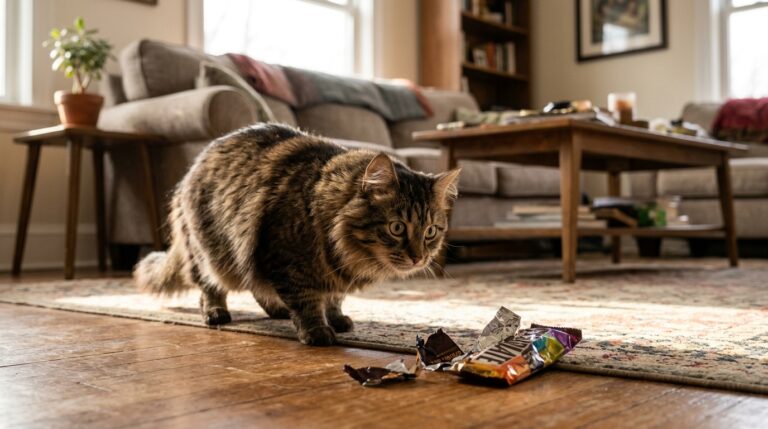
Cat Ate Chocolate? What to Do Next
Chocolate can be toxic to cats, so a suspected bite or lick deserves prompt professional attention. Methylxanthines are stimulant compounds that include theobromine and caffeine, both found in chocolate.
The next step depends on the chocolate type, the amount consumed and when it happened. A cat who looks well at first may still need prompt advice, because a normal appearance does not prove the exposure is harmless.
Key Takeaways
- Call a veterinarian or emergency clinic about a suspected exposure.
- Gather the package, product details, amount and time of exposure.
- A lick or small-looking amount still needs professional risk assessment.
- Never try to make your cat vomit at home.
- Chocolate is not an appropriate treat for a cat, even if the cat seems curious about it.
What to Do If Your Cat Ate Chocolate
Call your veterinarian or an emergency clinic promptly, even if your cat seems completely normal. Fast advice gives the vet a chance to assess the exposure using the product and amount. Keep the package nearby while you make the call.
A quick call can help determine whether your cat needs an exam or other care. Do not wait for signs to appear before asking for advice.
Never try to make your cat vomit at home; only a veterinarian should induce vomiting.
For added guidance, check a product’s ingredients and share what you find with the veterinary team. Chocolate can also be hidden in foods that do not look like candy.
Call a Veterinarian or Poison Control
Contact your regular vet or an emergency clinic as soon as you suspect an ingestion. If you cannot reach a clinic, poison control can help you judge the next step and explain what information matters.
ASPCA Poison Control is available 24 hours a day, 365 days a year, at (888) 426-4435. A consultation fee may apply because the ASPCA receives no outside funding. Pet Poison Helpline is also available at (855) 764-7661.
Tell the person you call whether the product was plain chocolate, a baked good, a drink or another food. If your cat got into a mixed snack, mention every ingredient you can identify. Quick, clear details help the clinic understand the possible exposure.
If Your Cat Only Licked Chocolate
A lick still deserves a professional risk assessment because the product and amount both matter. Chocolate on a spoon, icing, or a dessert can differ from a lick of a candy bar.
Describe what your cat reached and whether any food appears missing. Do not assume a lick is harmless just because you cannot see a bite. The vet can use those details with your cat’s size and health history.
Have These Details Ready
Gather these five details for the call. Share your best estimate if you cannot measure the amount exactly.
- Your cat’s approximate weight
- The chocolate type or product
- The amount missing or licked
- The time of exposure
- Package or ingredient information
Keep any wrapper or label where you can read it. A photo of the ingredient panel can help if you need to leave home for care. A normal appearance is not a reliable reason to postpone the call.
How to Estimate the Amount and Risk
The amount of theobromine per ounce differs sharply by chocolate type, so “a little” is not enough information to judge an exposure. Type and quantity help a veterinarian assess risk, along with your cat’s size and health.
Do not use the figures below as a safe-dose calculator. They compare theobromine concentration, not the dose your cat can safely eat.
| Chocolate type | Theobromine per ounce | Relative concern |
|---|---|---|
| Milk chocolate | 44 mg/oz | Lower concentration than darker types in this table |
| Semisweet chocolate | 150 mg/oz | Greater concentration than milk chocolate |
| Unsweetened baking chocolate | 390 mg/oz | Highest concentration in this table |
| White chocolate | Virtually none | Fat content can still be a concern |
Milk chocolate has less theobromine per ounce than semisweet or unsweetened baking chocolate. These amounts are reported concentrations by type, not a home rule for deciding whether an exposure is safe.
Cocoa powder and darker chocolate generally contain more theobromine than milk chocolate. White chocolate has virtually none, but its fat content can still cause concern. The kind of chocolate is only one part of the risk assessment.
A vet needs the chocolate type and the best estimate of the amount consumed. Recipe, type, amount, cat size and health history all shape the assessment. Pre-existing medical conditions can raise your cat’s risk, so include them when you describe the exposure.
If your cat ate chocolate cake, crumbs or chocolate mousse, the recipe and quantity determine what was eaten. Tell the veterinarian the product name and your best estimate instead of assuming a crumb or dessert is harmless.
For a homemade dessert, note the recipe or ingredients if you have them. For a packaged product, keep its label close. The word “chocolate” on a food label does not tell you how much chocolate your cat swallowed.
Do not guess at a toxic or lethal dose by matching your cat’s size to this chart. The table cannot account for the recipe, the exact serving or your cat’s health. Treat the table as a comparison of concentrations, not as a pass-or-fail dose calculator.
What Symptoms Can Appear, and When?
Nausea or vomiting can begin within less than an hour, so do not use a symptom-free first stretch as an all-clear. Early signs may affect the stomach and gut before more serious changes become clear.
A cat who seems fine still needs assessment after a suspected exposure. Symptoms can appear later, and your cat’s current behavior cannot tell you the full risk.
Early Signs May Begin Quickly
Early signs can include restlessness, nausea, vomiting, drooling and diarrhea. A cat may show one sign or several, and the signs can vary from case to case.
Early nausea or vomiting may appear in less than an hour after ingestion. That timing is not a promise that signs will start by then. A cat may look normal at first and still need prompt advice.
If your cat ate chocolate and is fine right now, do not leave the exposure unassessed. Call a veterinary professional and explain what happened, even if your cat is eating, moving and acting as usual.
Serious Signs Need Emergency Attention
More serious signs can include tremors, an abnormal heart rhythm and seizures. These signs need emergency attention. Tell the clinic about any change in your cat’s behavior or movement.
After a larger exposure, more serious symptoms may peak within 6-12 hours. The peak timing can differ, so you should not wait for that window to pass before contacting a vet. A quiet period does not confirm that your cat is safe.
Restlessness may be easy to miss if your cat is usually active. A new tremor, collapse or seizure is more obvious, but any sudden change deserves a prompt call. Describe what you see rather than trying to diagnose the cause yourself.
Note when each new sign begins and how long it lasts. If you can do so safely, keep a brief record of changes in behavior for the clinic. Note the time any new sign appears so you can report it accurately to veterinary staff.
Why Chocolate Can Affect a Cat’s Body
Chocolate’s theobromine and caffeine can affect more than one body system, which is why signs may involve both digestion and the heart or nervous system. These stimulants do not affect cats in the same way they affect people.
Theobromine is the primary concern at lower doses, while higher doses can involve both theobromine and caffeine. Either way, signs can involve more than one part of the body.
Cats do not process theobromine and caffeine as people do. These methylxanthines can affect the gastrointestinal, cardiovascular and central nervous systems. The effects depend on the exposure and the cat.
The gastrointestinal system handles digestion, so an effect there may show up as nausea or other stomach and gut trouble. The cardiovascular system includes the heart, where stimulation can affect its rhythm. Nervous-system effects can change movement or behavior.
Those links help explain why one exposure may cause digestive signs and another may involve the heart or nervous system. They do not mean every cat will develop every symptom. Your cat’s response may depend on the amount and individual health.
Theobromine remains the main concern at lower doses. At higher doses, both methylxanthines can contribute to the effects. The distinction matters because chocolate contains both compounds, rather than one single stimulant.
A pre-existing heart condition makes the exposure history especially important. Even if the condition seems controlled, the veterinary team needs to know about it before assessing possible heart effects. Share your cat’s medicines and prior diagnoses as well.
Health details can change how a veterinarian weighs the same reported exposure. Include long-term conditions, recent illness and any known heart concerns when you give your cat’s history. Make sure the veterinarian hears about any pre-existing heart condition before assessing the exposure.
How a Veterinarian Assesses Chocolate Exposure
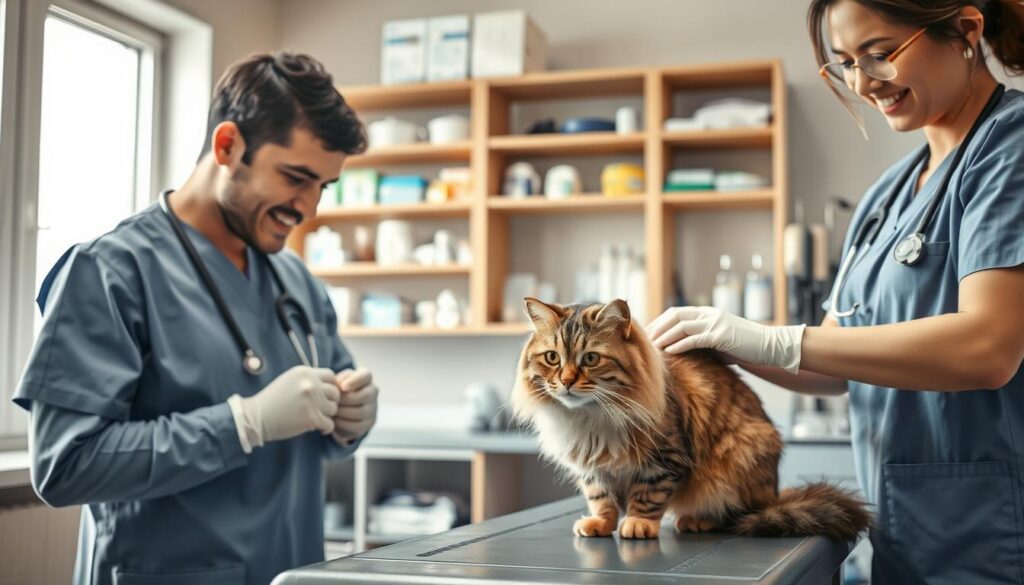
A veterinarian usually begins with your cat’s history, signs and a physical examination rather than relying on a specialized toxin test. The exposure history helps put the exam findings in context.
A typical assessment includes a physical exam and basic blood and urine tests. The vet may use these steps to check your cat’s general condition and possible effects.
How Ingestion History Guides the Exam
Tell the clinic what your cat ate, how much may be missing and when the exposure happened. The package or recipe can help clarify which product was involved. Your best estimate is more useful than a guess presented as an exact amount.
The veterinarian will consider your cat’s reported exposure along with the signs and physical exam. A history of access to other stimulants or medicines can also matter. Share what your cat could reach, even if you are unsure whether it was eaten.
Other stimulants and some medications can cause signs similar to chocolate toxicity. This makes a clear history important, especially when the food source is uncertain. Tell the vet about current prescriptions, recent doses and any possible access to other products.
When Blood and Urine Tests Help
Basic blood and urine tests can help assess general health and possible effects. A veterinarian may use them as part of the initial assessment when indicated. The choice depends on the case and your cat’s condition.
A blood test can measure methylxanthine levels, but veterinarians rarely order it. Diagnosis usually relies on ingestion history and clinical signs instead. The result is not usually the main tool for deciding what happened.
| Assessment | What it helps evaluate | How it is used |
|---|---|---|
| Physical examination | Your cat’s condition and signs | Part of the typical initial assessment |
| Basic blood and urine tests | General health and possible effects | Typical initial tests when indicated |
| Blood methylxanthine measurement | Methylxanthine levels | Rarely ordered; history and signs usually guide diagnosis |
A test result is only one part of the case. The type of product, the reported amount and your cat’s observed signs help the veterinarian build a clearer picture. Mention any other stimulant exposure or medication that could help explain the signs.
What Treatment Can the Vet Provide?
Treatment is chosen by a veterinarian according to the amount consumed, the time since ingestion and your cat’s condition. Clinic care may focus on removing chocolate, limiting further absorption or managing symptoms.
These options are veterinary decisions, not a do-it-yourself treatment menu. The care plan depends on the exposure and your cat’s needs.
Removing Chocolate Before More Is Absorbed
If appropriate, a veterinarian may induce vomiting to remove chocolate from the stomach. The vet may also give activated charcoal to reduce further absorption. Whether either option fits depends partly on the dose and time since ingestion.
Vomiting is not right for every cat or every situation. The clinic weighs the timing and your cat’s condition before choosing a step. Activated charcoal is also used only when the veterinary team judges it suitable.
Do not try to copy these steps with household products or instructions found online. A mistaken attempt can harm your cat or delay needed care. Let the clinic decide what can safely help.
Supporting the Cat and Treating Symptoms
IV fluids may support your cat during care. Medication can address symptoms, including effects on the heart or nervous system. The team chooses medicines based on what your cat is experiencing.
Possible measures include:
- Veterinarian-induced vomiting
- Activated charcoal
- IV fluids
- Symptom-directed medication
The list does not mean every cat needs all four measures. Some options may not be suitable for a particular exposure, and the team can change its plan as your cat’s condition becomes clearer.
Ask the clinic to explain any care step you do not understand. Follow its directions about food, water, medicines and follow-up checks. The treatment plan belongs to your cat’s case, not to a general recipe.
Keep the clinic’s instructions where anyone caring for your cat can find them. If another household member is helping, share the exact directions rather than relying on memory. Follow the clinic’s care instructions instead of trying to recreate a treatment at home.
What Recovery Can Look Like
Most cats have a favorable prognosis after chocolate toxicosis, but the expected course depends on how severe the exposure is. Many cats recover without lasting effects when they receive appropriate care.
Signs may last 24-96 hours, depending on severity. A generally favorable outlook is not permission to wait for your cat to recover without veterinary advice.
Chocolate toxicosis is rare in cats, and most cases have a favorable prognosis with no lasting effects expected. That outlook cannot tell you how your cat will fare before a veterinarian assesses the exposure. Each case still needs an individual plan.
Recovery time can vary with the severity of the case. Some cats may need support while signs continue, while others may have a shorter course. Follow the veterinary team’s instructions rather than judging progress by a single good hour.
After treatment, watch for changes that the clinic asked you to track. A new sign may matter even if your cat seemed better earlier. Keep notes on appetite, behavior and any concerns the team highlighted.
Diarrhea or changes in urination may also be worth reporting if they occur during recovery. Do not assume a new problem is part of the expected course. The care team can tell you whether your cat needs another check.
If your cat comes home after treatment, keep the clinic’s contact details easy to find. Share its home-care instructions with anyone else who may look after your cat. Contact the veterinary team promptly if signs return or worsen after your cat comes home.
How to Prevent Another Exposure
A closed cabinet is safer than a counter because chocolate can appear in more than candy bars. Keep chocolate products and their packaging where pets cannot reach them.
Wrappers can pose an obstruction risk if swallowed. Chocolate may also turn up in baked goods, drinks and some dietary supplements.
Use a few simple habits to reduce access at home:
- Store candy, cocoa and baking products in a closed cabinet.
- Keep chocolate drinks covered and out of reach.
- Secure wrappers and leftovers in a pet-inaccessible trash container.
- Tell household members and guests not to feed chocolate to cats.
Leftover cake, baking chips and cocoa can be easy to overlook after cooking. Put them away before leaving the kitchen, and check tables after a meal. A covered drink still belongs somewhere a cat cannot reach.
Pay extra attention during Halloween, Christmas, Hanukkah, Valentine’s Day and Easter. Guests may bring sweets, children may leave candy in low places, and wrappers can fall beside furniture. The Pet Poison Prevention guidance also stresses securing household hazards and seeking veterinary help after a suspected exposure.
Dogs may be drawn to unattended treats too, so put food away when pets share a room. A wrapped piece is not safe merely because the package is intact; cats may chew through it or swallow part of it.
Ask everyone in your household to follow the same storage rule during holiday gatherings.

Conclusion
Chocolate exposure is a situation to handle with professional guidance, not guesswork. The chocolate type and amount shape the risk, and your cat may not show signs right away.
Keep your veterinarian’s number and a poison-control contact easy to reach. Save your veterinarian and a poison-control contact in your phone today, before you need either one.