Can Cats Eat Peanut Butter? What Cat Owners Should Know in 2026
Can Cats Eat Peanut Butter ?? important questions for all cat owners in 2026.
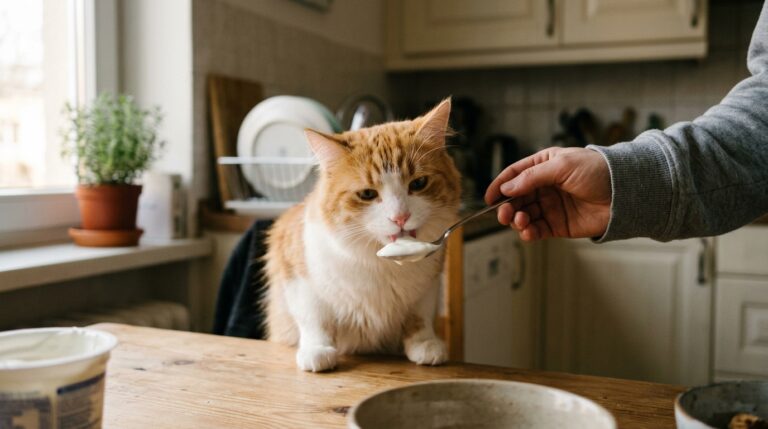
Your cat stares at the spoon as if it holds the best food in the world. You want to share, but you want to be sure first.
A small lick of peanut butter rarely harms a healthy cat, but it gives your cat nothing it needs. Cats are obligate carnivores, which means they must get nutrients from meat to stay healthy. Peanut butter is a treat at best.
Table of Contents
Plain peanut butter, the kind sold for people, is not toxic to most cats in small amounts. The real question is what else is in the jar. Check the jar for xylitol before anything else, since that single ingredient changes the answer.
Is Peanut Butter Safe for Your Cat?
Plain peanut butter is safe for most healthy cats in a very small amount. For a healthy cat, less than 1 teaspoon of plain peanut butter without xylitol is usually fine, though mild vomiting or diarrhea may still happen.
Can peanut butter kill a cat? Plain peanut butter rarely harms a healthy cat, so the real danger is the sweetener in some jars. Read the label before you share a spoon.
Peanut butter with xylitol is an emergency, and you should call your vet right away.
Why Plain Peanut Butter Is a Poor Choice
Plain peanut butter is rich, and its high fat content can upset a cat’s stomach. Many cats simply do not need that kind of food, and a rich snack can cause problems for no good reason.
Cats with gastrointestinal disease, pancreatitis, hepatitis, or diabetes may react more strongly, even without xylitol. If your cat has one of these conditions, ask your vet before you offer any peanut butter at all.
How Much Peanut Butter Is Too Much
Going past one teaspoon raises the odds of an upset stomach for a healthy cat. Do not wait for signs to appear before you act if you think xylitol was involved.
Dogs are the bigger concern with xylitol. ASPCA Poison Control says cats are not negatively affected by xylitol, while dogs can develop low blood sugar and potentially liver damage. If you need help fast, call ASPCA Poison Control at (888) 426-4435.
Why Peanut Butter Gives Cats Nothing They Need
Your cat’s digestive system is built for meat, and peanut butter does not fit that design. A cat needs meat proteins to stay healthy, and peanut butter does not supply them.
Peanut butter adds calories but almost no nutrients a cat can use, which makes it an empty-calorie food. A cat diet should center on food made for cats, not on snacks that fill the bowl without feeding the body.

Peanut butter is high in fat, so one spoon can carry a large share of a small cat’s daily calories. That extra fat can add weight over time, even when each snack seems tiny.
Thick or chunky peanut butter can also stick in the throat and cause choking. Watch your cat closely for these signs of choking:
- Pawing at the mouth
- Gagging
- Drooling
- Wheezing
- Blue gums
If your cat is overweight, stop offering peanut butter as a reward, since the calories add up quickly.
What to Do If Your Cat Ate Peanut Butter
Start by reading the label, because xylitol turns a minor snack into an emergency. If the label lists xylitol, call your vet right away.
Can cats eat peanuts? Plain, unsalted peanuts are not toxic to cats, but they are high in calories and best avoided. Whole peanuts or shells can cause choking or an intestinal blockage if swallowed.
First, remove the jar so your cat cannot go back for more. Next, check the label for xylitol and note how much your cat ate, since your vet will ask.
Then watch your cat for choking. Use the signs in the earlier list, and act at once if your cat cannot breathe well. Finally, monitor your cat at home for vomiting or diarrhea.
| Situation | What to do |
|---|---|
| Plain peanut butter, no symptoms | Monitor at home and keep the jar out of reach |
| Peanut butter with vomiting or diarrhea | Monitor closely and call your vet if signs continue |
| Label lists xylitol | Call your vet right away |
Call your vet the same day if your cat has trouble swallowing or stops eating.
Peanut Butter Bread, Crackers, and Other Peanut Butter Snacks
Mixing peanut butter with jelly, bread, or crackers adds problems rather than softening them. Human snacks made with peanut butter often add fat, empty calories, and sweeteners that cats do not need.
Peanut butter and jelly should not go to your cat. The jelly may add sweeteners that are harmful to pets, and both foods add empty calories.
Peanut butter cookies add fat, empty calories, carbohydrates, and possibly harmful sweeteners. Peanut butter crackers are high in carbohydrates and fat, and they may contain artificial sweeteners. Peanut butter bread adds carbohydrates on top of the fat, so it is a poor snack for cats.
Can kittens eat peanut butter? Kittens should not get it as a treat, because they are more vulnerable to its fat load. A young cat needs a steady diet of food made for kittens.
Read the full ingredient list of any human snack before sharing it with your cat.
Safer Treats to Offer Your Cat Instead
A plain 1-inch cube of cooked chicken gives your cat more of what it needs than any peanut butter snack. Offer only plain cooked chicken or turkey, with skin and bones removed.
What human foods are safe for cats? Cooked chicken, turkey, and fish with skin and bones removed are the safest choices, in 1-inch cubes. Cook the poultry thoroughly and prepare it without herbs, butter, oils, or flavorings.
Meat-Based Treats That Work
A plain piece of cooked chicken or turkey works well as a small meat-based treat for a healthy cat. Keep each serving to a 1-inch cube, and offer it as a snack rather than a meal.
Cooked chicken should be handled the same way each time, so the treat stays simple and safe. Skip any seasoning, even when the meat was cooked for you.
Eggs and Fish as Occasional Snacks
A healthy cat can have a small amount of boiled egg as a snack. Can cats eat scrambled eggs? Yes, scrambled eggs are fine in small amounts when cooked plain, with no butter or oil.
Never give your cat a raw egg, even as a small taste.
Raw eggs can carry Salmonella or E. coli, and they contain an enzyme that interferes with vitamin absorption. Cooked eggs avoid both problems.
Cooked fish with skin and bones removed is a suitable occasional fish treat, with a 1-inch cube as a serving. Start with a single small piece and watch for two days before offering it again.
Conclusion
Peanut butter is best kept off your cat’s plate. The one rule to keep is simple: no xylitol, and no regular feeding.
Cats do best on food made for cats, with meat as the main protein. A rare lick of plain peanut butter is not a crisis, but it has no place in a daily routine.
Check the label on the jar in your pantry today and set aside any product listing xylitol.
FAQ
Can cats eat peanut butter and jelly?
No, cats should not eat peanut butter and jelly. The jelly may add sweeteners that can harm pets, and both foods add empty calories a cat does not need. A small lick of plain peanut butter rarely harms a healthy cat, but the jelly changes the picture. Keep the sandwich away from your cat and offer a meat treat made for cats instead.
Can cats eat peanut butter cookies?
No, cats should not eat peanut butter cookies. They add fat, carbohydrates, and empty calories, and they may contain harmful sweeteners. Many cookies are baked with sugar or other sweeteners that are not meant for cats. One cookie may not cause a crisis, but it gives your cat nothing useful. Pick a small piece of plain cooked chicken instead.
Can cats eat peanut butter crackers?
No, peanut butter crackers are not a good choice for cats. They are high in carbohydrates and fat, and they may contain artificial sweeteners. A cracker with a little peanut butter adds little value and extra calories. If your cat begs for a bite, offer a small cube of plain cooked chicken or turkey instead.
Can cats eat peanuts?
Plain, unsalted peanuts are not toxic to cats, but they are high in calories and best avoided. Whole peanuts or shells can cause choking or an intestinal blockage. Peanuts are also rich in fat, which can upset the stomach and lead to vomiting or diarrhea. If your cat eats a whole peanut in its shell, watch closely and call your vet if signs continue.
Can cats eat scrambled eggs?
Yes, a small amount of scrambled egg is fine for most healthy cats, as long as it is cooked plain. Use no butter, oil, salt, or seasoning. Raw eggs are a different matter, since they can carry Salmonella or E. coli. Keep each portion to a small bite and watch your cat closely after the first serving.
What human foods are safe for cats?
Cooked chicken or turkey and cooked fish are the safest human foods for most cats. Remove the skin and bones, and skip herbs, butter, oils, and seasonings. Cut the meat into 1-inch cubes and treat it as a small snack, not a meal. Start with one piece and watch your cat closely before offering more.