Do Cats Eat Rice? What Cat Owners Should Know
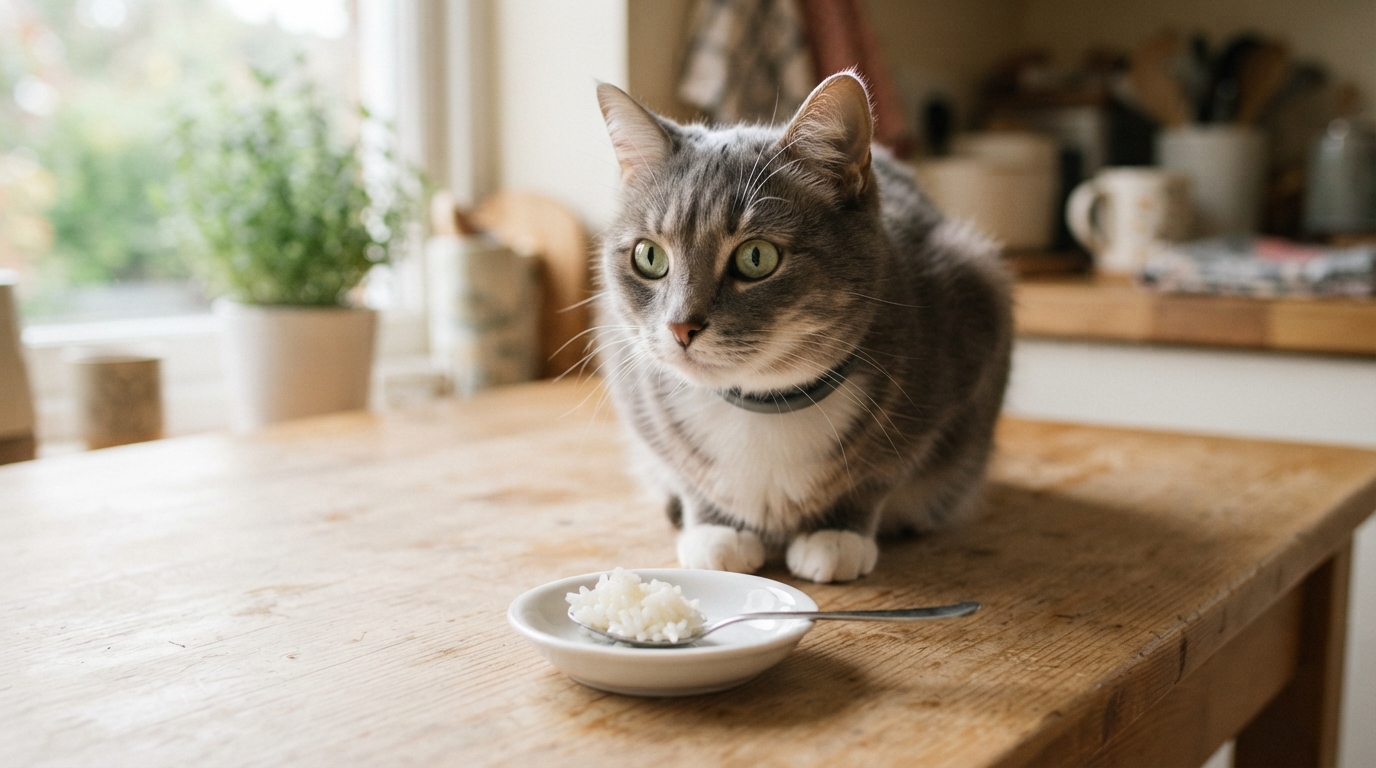
Yes, your cat can eat a tiny amount of plain, thoroughly cooked rice, but it should be an infrequent treat rather than a meal. A curious sniff at your plate may lead to a hopeful paw, but your cat’s needs come first. Tolerance differs between cats, so even a small taste may not suit every pet. Rice is not a meal replacement, and it offers little reason to change a healthy feeding routine. This guide explains what form is safe, how to prepare it, and when to ask your veterinarian. Keep your cat’s regular meals based on a complete cat food.
Table of Contents
Do Cats Eat Rice? Is It Safe?
A few grains of plain, thoroughly cooked rice are not toxic to most cats, while uncooked rice is a poor choice. Plain and cooked are the key conditions, since rice dishes often contain extras that do not belong in a cat’s bowl.
White rice and brown rice may both be offered in a tiny amount when fully cooked. Rice is an occasional treat, never a replacement for a cat’s regular food. Cats eat rice only as an optional extra, not because their bodies need grains.
Offer only a tiny amount of plain, thoroughly cooked rice as an occasional treat.
Why plain cooked rice is the only safe form to consider
Plain cooked rice has no added seasonings, sauces, oils, or other ingredients. That matters because a rice dish made for people can include foods that harm cats. A simple taste is very different from fried rice or a seasoned side dish.
Rice toxic effects are not the main concern with a few plain, cooked grains. The concern is whether your cat can digest the food and whether it contains unsafe ingredients. A cat’s response can differ from another cat’s response.
Why uncooked rice can upset a cat’s stomach
Uncooked rice is hard to digest and may contain lectin. If a cat eats a large amount, lectin can cause intestinal problems, including vomiting and diarrhea. A few scattered grains still should not become a snack routine.
Store dry rice in a closed container, especially if your cat likes to explore counters or pantry shelves. A spilled bag can give a curious cat access to much more than a taste. Keep uncooked rice secured where your cat cannot reach it.
Does Rice Give Cats the Nutrition They Need?
Rice contributes little to a cat’s nutritional needs because cats need a diet that supplies the right nutrients in the right amounts. Nutrition comes first, so your cat’s main calories should come from life-stage-appropriate complete cat food.
Cats also need steady access to fresh water. A food label should say that the food is complete and balanced for your cat’s life stage. That statement helps you tell a suitable daily food from an occasional extra.
What obligate carnivores need from their diet
Cats are obligate carnivores, which means their bodies rely on nutrients found in a meat-based diet. They need specific nutrients, not a fixed list of ingredients. Cats do not necessarily need every nutrient to come directly from animal tissue.
That distinction does not make rice a useful staple. Rice supplies few of the nutrients a feline needs, and it cannot meet a cat’s full dietary needs. A healthy diet must provide required nutrients in the right amounts.
The question “what do cats eat and drink” has a simple answer: their main calories should come from complete cat food made for their life stage, and they should have fresh water. A cat may enjoy a new taste, but enjoyment alone does not make a food nutritionally sound.
How to check a cat food’s nutritional adequacy statement
Look for the nutritional adequacy statement on the package. It says which life stage the food supports and whether the food is complete and balanced. The AAFCO life-stage terms include gestation/lactation, growth, maintenance, and all life stages.
“Complete” means the food contains all required nutrients. “Balanced” means those nutrients come in the correct ratios for a particular life stage. Both parts matter when you choose a regular cat food.
Food made for growth may suit kittens, while adult cats often need food made for maintenance. The statement can also say that a food is intended for all life stages. Check that your cat’s food is complete and balanced for the appropriate life stage.
Is White or Brown Rice Better for Cats?
If you offer rice, plain cooked white rice is generally the gentler option for a cat’s digestive system. White rice is softer and lower in fiber, while brown rice has more fiber and may be harder for some cats to digest.
Neither kind offers much nourishment to cats. Brown rice’s extra fiber does not make it a meaningful source of feline nutrition. The best choice, if you decide to share a taste, is plain white rice cooked until soft.
| Rice type | Preparation and digestibility | Nutritional value |
|---|---|---|
| Plain cooked white rice | Cooked and generally softer | Little nourishment for cats |
| Plain cooked brown rice | Cooked with more fiber; potentially harder for some cats to digest | Little nourishment for cats |
| Uncooked white or brown rice | Not prepared for feeding and hard to digest | Not suitable to offer |
The difference between white and brown rice is mostly about texture and fiber. Brown rice has an outer layer that white rice lacks, so it can feel firmer after cooking. That added fiber does not turn it into a useful source of the nutrients cats need.
Some cats may tolerate either kind, while others may not enjoy the texture or may have trouble digesting it. A preference for one type does not mean that it belongs in a regular meal. Choose neither type as a regular addition to your cat’s meals.
How Much Rice Can a Cat Eat?
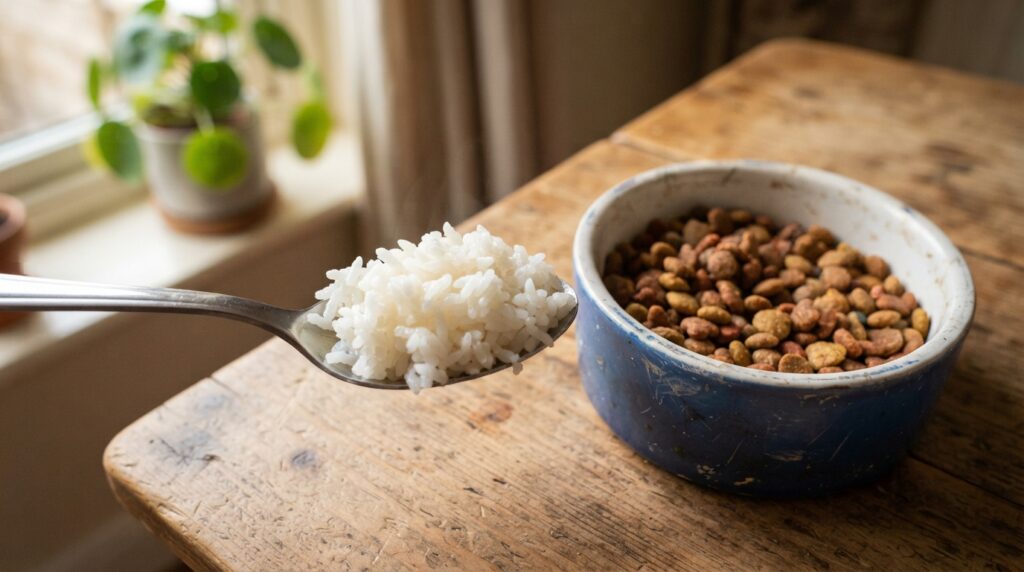
Keep rice to an occasional teaspoon-sized treat and count it within the day’s total treat calories. Small amounts help keep an extra from crowding out your cat’s regular food.
A teaspoon of rice contains about five calories. All treats combined should make up no more than 10 percent of your cat’s daily calories. That limit covers every treat, not rice alone.
Use these steps when you offer a taste:
- Keep the portion tiny.
- Count it toward the day’s treats.
- Stop if your cat has digestive trouble.
Do cats eat rice every day? Rice should be occasional, not daily, because it adds little nutrition. Frequent or large amounts of carbohydrates can contribute to weight gain and push complete food out of the daily diet.
Your cat’s size, health, and usual food intake can affect a suitable treat allowance. A cat with a weight concern may need fewer treat calories than a healthy cat at an ideal weight. Ask your veterinarian to help set an appropriate treat allowance for your cat’s health and calorie needs.
Can Rice Help With an Upset Stomach?
Plain cooked rice may be suggested in some mild digestive cases, but it does not work the same way for every cat. It is not a treatment, and it cannot replace a diagnosis or care from a veterinarian.
A veterinarian may recommend a small amount for some mild cases of diarrhea or constipation. Follow your veterinarian’s advice rather than using rice as a home remedy. Cats can respond differently, and some have trouble digesting rice and other carbohydrates.
Rice and diarrhea or constipation
A change in your cat’s stool can have many causes. Rice may suit one cat during a mild, short-lived change, but it may not help another. Carbohydrates can be difficult for some cats to digest.
Do not assume that a food change will fix a digestive issue. Your veterinarian can help decide whether rice fits your cat’s needs and whether another step is needed. This matters even more if your cat has an ongoing health concern.
Too many carbohydrates can contribute to weight gain and health problems such as diabetes. A cat that already struggles with food or weight may need a closer look before you add anything new.
When digestive symptoms need veterinary advice
A brief, mild change is different from a symptom that persists, gets worse, or keeps coming back. Watch for changes in appetite, energy, and stool, since they can help you describe what is happening.
Contact your veterinarian if symptoms continue or return, rather than waiting for rice to solve the problem. Get advice sooner if your cat seems very unwell or cannot keep food down. Your vet can assess the cause and suggest care that fits your cat.
Keep track of when symptoms began and how often they occur. A clear timeline gives your veterinarian useful details without requiring you to guess at the cause. Contact your veterinarian if digestive symptoms persist, worsen, or return.
How Should You Prepare Rice for a Cat?
Cook rice thoroughly in water and leave out every seasoning and added fat. Keep the recipe plain, even if you would normally add flavor for yourself.
You can boil rice, steam it, or use a rice cooker. Do not fry rice or cook it with oil or fat. Each method should leave out seasonings and other additions.
| Cooking method | Liquid | Additions |
|---|---|---|
| Boil | Water | None |
| Steam | Water only as needed for steaming | None |
| Rice cooker | Water | None |
Use this short checklist before serving:
- Cook the rice thoroughly.
- Serve it plain and cooled to a comfortable temperature.
- Offer a tiny amount by itself or mixed into regular food.
Let the rice cool before it reaches your cat’s bowl. Hot food can be uncomfortable to eat, and a small taste does not need extra ingredients to appeal to your cat. A few plain grains are enough for an occasional taste.
If you mix rice into regular food, keep the usual meal easy to recognize and eat. Some cats may pick around a changed texture, while others may ignore it entirely. Remove any uneaten rice rather than letting it sit in your cat’s bowl.
Which Rice Foods and Add-Ins Should Cats Avoid?
A rice dish is unsafe for your cat when its added ingredients include harmful seasonings or excessive salt. Human recipes can hide risky extras, even when rice is the main ingredient.
Onions and garlic can harm cats in raw, cooked, powdered, or dehydrated forms. Do not share seasoned rice, fried rice, or rice with sauces. A dish may contain more than one ingredient that is not suitable for your pet.
| Ingredient or food | Why to avoid it | Relevant risk or action |
|---|---|---|
| Onion, garlic, or chives | Can irritate the GI tract and damage red blood cells | Avoid raw, cooked, powdered, and dried forms |
| Heavily salted rice | Can change thirst and urination and disrupt blood electrolytes | Do not share |
| Foods containing xylitol | Can cause low blood sugar and possible liver damage | Keep away from your cat |
| Fried rice or rice with sauces | May contain oil, garlic, onion, or soy sauce | Do not share |
Fried rice, sauces, and seasoned rice
Fried rice often contains oil, salt, and seasonings. Sauces may add more salt or ingredients that are unsafe for cats. Even a small serving made for people can include several things you would not choose for your cat.
A rice cake is not a better treat because it may contain salt or sugar. Rice Krispies and similar cereals can also contain added sugar, salt, or flavorings. These foods are made for people, not to meet a cat’s needs.
Toxic ingredients and what to do after an exposure
Onions, garlic, and chives can cause GI irritation and damage red blood cells. Cats are more susceptible to these foods than dogs. Excessive salt can cause thirst and urination changes, abnormal blood electrolytes, and, in severe cases, vomiting, diarrhea, tremors, seizures, or death.
Xylitol appears in some gum, candy, baked goods, and toothpaste. It can cause low blood sugar and may damage the liver in pets. Check ingredient lists before letting your cat near human food.
If your cat may have eaten a dangerous food, note the amount and contact a veterinarian or ASPCA Poison Control at (888) 426-4435. Keep the packaging or ingredient list available when you call for advice.
Which Fruits and Vegetables Can Cats Eat?
Plain cooked vegetables can be occasional snacks, but they should never take the place of your cat’s animal-protein-based meals. Plant foods are extras, not a main source of feline nutrition.
Cats in the wild may eat small amounts of plant matter incidentally, but vegetables are not the basis of their diet. Vegetables must not replace animal protein. Keep your cat’s regular food at the center of each meal.
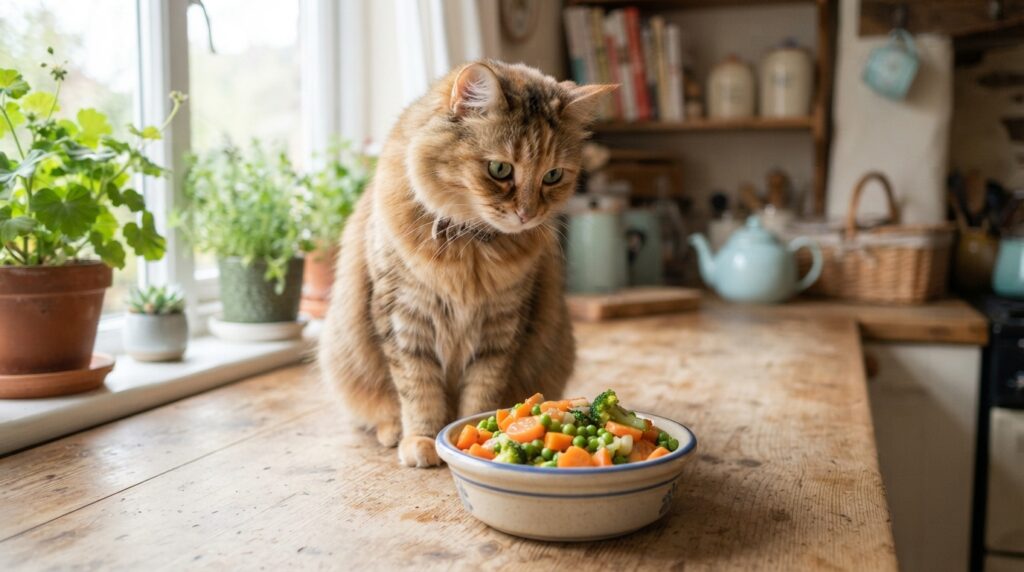
Cooked vegetables that can be occasional snacks
Plain cooked carrots, sweet potatoes, broccoli, cauliflower, green beans, peas, cucumber, zucchini, and pumpkin can be occasional snacks. Cook them without seasoning, salt, garlic, onion, or oil. Keep the portion small and the texture easy to chew.
Here are five simple examples:
- Cooked carrots
- Sweet potato
- Broccoli
- Green beans
- Plain pumpkin
These options are not a complete food for cats. Vegetables add variety, but they do not provide the full nutrition your cat needs from regular meals. A cat may also turn away from a vegetable, which is a good reason not to force it.
Raw vegetables need careful preparation
Raw vegetables can be firm and hard for a cat to chew. Finely grate hard vegetables such as raw carrots so your cat can manage a small taste more easily. Steaming can also make vegetables softer and easier to digest.
Do cats eat vegetables in the wild? They may take in small amounts of plant matter while eating prey, but that does not make vegetables the basis of their diet. A cat’s natural eating pattern is not a reason to replace a complete meal with produce.
For raw vegetables, start with a very small piece and watch how your cat handles it. Skip anything that is tough, large, or hard to chew. Introduce only one new vegetable at a time and stop if your cat develops digestive trouble.
What Else Can Cats Eat Besides Rice?
If you want to share a small human-food treat, plain animal-protein options are generally a better fit than rice. Plain tuna can be an occasional treat, but it should never replace complete cat food.
Some fruits, such as blueberries or seedless watermelon, may also be offered in small amounts if plain. Keep fruit and tuna as extras, not regular meals. Your cat does not need either food to meet daily nutrition needs.
For watermelon, offer only the plain flesh, with seeds and rind removed. Cats with health conditions should have new foods only with veterinary guidance. You can read more about watermelon safety for cats before sharing a taste.
Some cats may enjoy a tiny piece of fruit, while others may not care for it. A new food should not change the balance of your cat’s usual meals. Keep treats simple and avoid offering several new foods at once.
Cats outside may catch small prey or encounter scraps, but those finds do not provide a dependable, balanced diet. Outdoor food can also carry risks, and you cannot always know what an animal has eaten. A pet that roams outdoors still needs reliable meals at home.
For more cat food ideas, browse cat care and food topics that cover other human foods. The ASPCA’s people-food safety guidance also lists common foods that can harm pets. Keep your cat’s main meals complete and balanced, whatever occasional treat you choose.
Conclusion
Plain cooked rice is an optional nibble, not something your cat needs in its diet. It cannot replace complete cat food, which supplies the nutrition your cat needs for health and daily life.
If your cat has a health condition or sensitive digestive system, check with your veterinarian before introducing rice. That simple step can help you avoid an extra that does not suit your cat. If you are unsure whether rice suits your cat, check with your veterinarian before offering it.