Can Cats Eat Raw Eggs? Risks, Safety, and Safer Alternatives
No, cats should not eat raw eggs; fully cooked, plain egg is the safer occasional treat. Your cat may watch closely as you make breakfast, but that interest does not make every bite safe. An egg is not a substitute for complete cat food. Complete and balanced cat food is food formulated to provide the nutrients a cat needs as its main diet. Knowing the risks can help you respond to an accidental taste and choose a plain cooked alternative.
Table of Contents
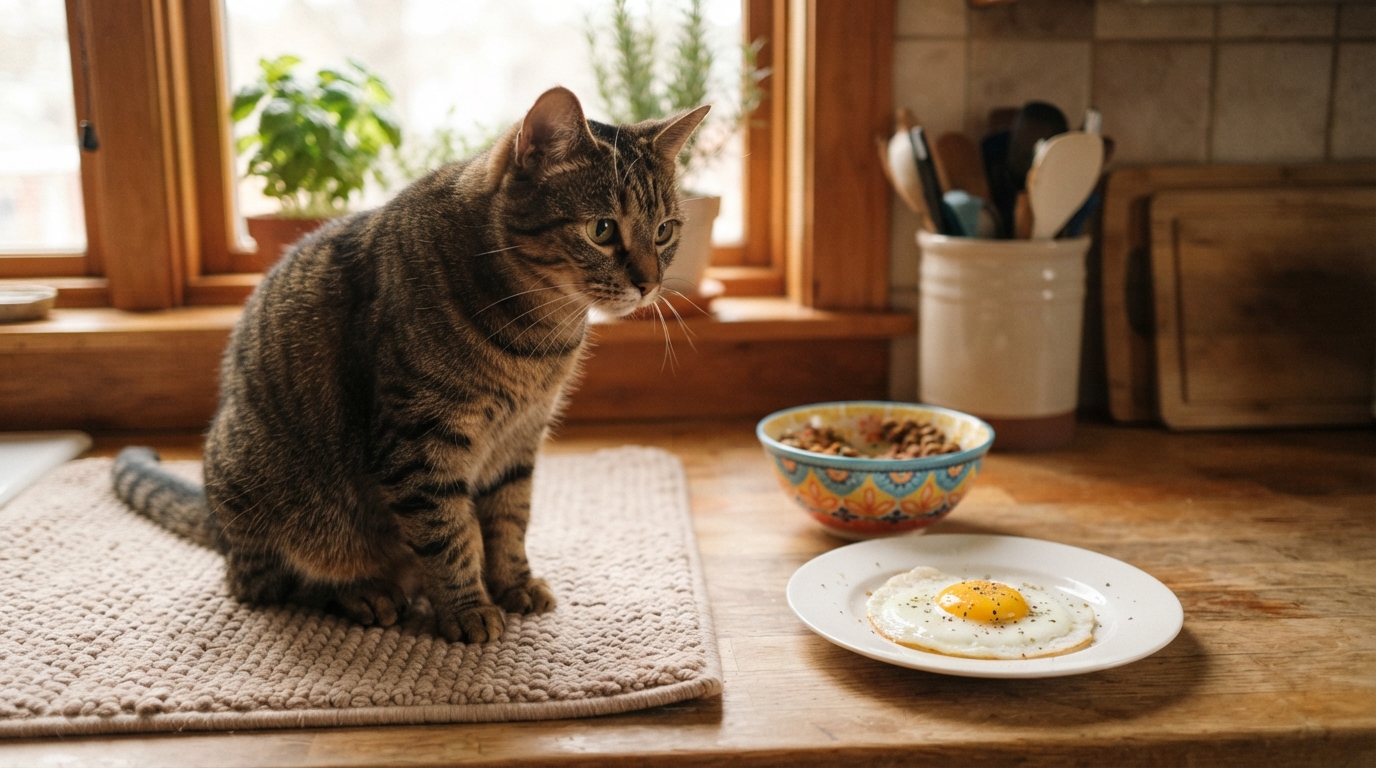
For many pets, breakfast is a chance to investigate what you are eating. A curious sniff is harmless, but a taste of raw egg can bring health risks that are easy to avoid. Cooked egg offers a safer option, as long as it stays plain and remains a small part of the diet. Keep raw egg away from your cat, even when they seem eager to taste it.
Can Cats Eat Raw Eggs?
A raw egg is unsafe for cats because it can expose them to bacteria and, in the whites, avidin. Both parts matter, but they raise different concerns for your pet. Raw egg yolk is not free of risk just because avidin is found in egg whites.
Raw eggs can expose cats to Salmonella, E. coli, and avian flu. The table shows how bacterial contamination and avidin affect a cat’s health in different ways.
Bacteria in raw eggs
Bacteria may be present in a raw egg, including its yolk. That means cats should not eat raw eggs in any form, whether the egg is whole, separated, or mixed into another food. A small amount does not remove the chance of exposure.
Raw egg can also expose a cat to avian flu. The risk is not limited to a cat that eats the white, since bacterial contamination can affect the yolk too. A raw yolk is not a safe option simply because it contains no avidin.
Avidin in raw egg whites
Avidin is a protein in raw egg whites that binds biotin, also called vitamin B7. When avidin binds biotin, it can interfere with the cat’s ability to absorb that nutrient. The concern is specific to the whites, not the yolk.
Repeated intake of raw egg whites can contribute to biotin deficiency. One taste does not mean a cat will develop a deficiency, but raw whites offer no safe benefit that justifies the risk.
| Hazard | Where the risk comes from | Why it matters |
|---|---|---|
| Bacterial contamination | Raw egg | Salmonella, E. coli, or avian flu exposure |
| Avidin | Raw egg whites | Binds biotin (vitamin B7) and can interfere with absorption |
| Repeated raw egg white intake | Raw egg whites | Can contribute to biotin deficiency |
Do not offer a cat raw egg, including raw yolk or raw egg whites.
Cooking changes the choice: a fully cooked egg does not carry the same raw-egg concerns described here. Raw yolk still carries the bacterial risk, even though avidin is a concern specific to the whites.
What Should You Do If Your Cat Eats a Raw Egg?
If your cat has just eaten raw egg, note how much they ate and watch for changes in their behavior or appetite. One exposure does not guarantee illness, but no obvious signs do not rule out a problem. Your cat may show few signs at first.
Call your veterinarian if your cat ate more than one raw egg, has severe symptoms, or remains unwell beyond 24 hours. Cats with kidney disease or another significant health condition need prompt veterinary advice after exposure.

Foodborne infection may cause these changes:
- Vomiting
- Diarrhea
- Lethargy
- Reduced appetite
Keep track of when your cat ate the egg and whether their behavior changes. Some infected cats show few or no obvious signs, so acting normal does not prove that nothing happened. If you are unsure what to do after a potentially harmful food exposure, veterinary guidance for cat health concerns is more useful than trying to diagnose your pet at home.
Do not wait for symptoms to become severe before seeking help if your cat has a significant health condition. Share how much egg your cat ate and when the exposure happened. Severe symptoms or signs that continue beyond 24 hours warrant a call to your veterinarian.
How Can You Prepare Eggs Safely for Cats?
A boiled egg or plain scrambled egg is suitable only when it is cooked through and served without extras. Cooked eggs are a safer choice for cats than raw egg, but how you prepare them still matters. A cat’s small bite should not come from a rich, seasoned breakfast plate.
Egg dishes should reach an internal temperature of 160°F. Once the egg is cooked, remove its shell and keep the serving plain.

Cook eggs until fully set
Boiling or scrambling works when the egg is cooked all the way through. Check that neither the white nor the yolk remains runny. A firm texture helps you see that the egg is fully cooked, rather than just warmed on the outside.
Use the 160°F internal temperature as the target for egg dishes. Cook the egg before setting aside a portion for your cat. The same rule applies to egg whites; they should not be left soft or raw.
Keep the recipe plain
Do not add ingredients that can make a cat’s portion unsuitable. Keep these items out of eggs you plan to share:
- Oil
- Salt
- Seasonings
- Butter
- Milk
- Onions or garlic
Onions and garlic can harm cats, while salt, fat, and seasonings add ingredients your cat does not need. Scrambled eggs from a breakfast plate may contain several items on this list, even when the dish looks simple. A small bite of plain cooked egg is different from a raw or heavily seasoned breakfast portion.
Egg shells should be removed before serving, and the egg should be cut into a manageable bite. Do not assume a dish is plain because you prepared it at home; recipes can include hidden extras. Remove the shell and check the ingredient list before offering any portion from your own plate.
How Much Cooked Egg Can Cats Eat?
For a cat, cooked egg is an occasional treat, not a daily menu item. Offer egg about once or twice a week, rather than letting it become part of every meal. Raw eggs every day are not appropriate for cats.
All treats combined should provide no more than 10% of daily calories, leaving 90% for balanced cat food. The serving guide below gives suggested cooked-egg portions by cat weight.
| Cat weight | Suggested cooked-egg serving | Kitchen measure |
|---|---|---|
| Up to 5 pounds | 1 teaspoon | 1 teaspoon |
| 6-10 pounds | 1 teaspoon | 1 teaspoon |
| 11-15 pounds | 2 teaspoons | 2 teaspoons |
| 16-20 pounds | 1 tablespoon | 3 teaspoons |
| Over 20 pounds | 1 tablespoon | 3 teaspoons |
These measures are a guide to how much egg to offer, not a reason to add extra treats on top of your cat’s usual snacks. Count every treat, including egg, when you think about the daily calorie share. Cats still need most of their calories from complete cat food.
If your cat enjoys other snacks, consider their combined amount before offering egg. A few small treats can add up across the day, even when each one seems minor. The 10% limit applies to all treats together, not to each type of treat on its own.
Egg should remain an occasional part of a cat’s diet, not a way to fill a food bowl. Cats that already get several treats may have little room left for another one. If your cat already gets several treats, count them together before offering egg.
What Nutrition Does Egg Provide, and Can It Replace Cat Food?
Egg offers protein, but a whole egg can use up a substantial share of a cat’s daily calories. A medium egg has about 6 grams of protein, while one whole egg has roughly 70 calories. That calorie total is nearly one-third of the daily caloric requirement of an average 10-pound cat.
An egg alone is not nutritionally complete and should not replace a cat’s regular balanced food. Protein is useful, but it is only one part of the nutrients a cat needs.
Protein and calories in an egg
Eggs contain protein and fat, along with calories that matter when you plan your cat’s diet. The roughly 6 grams of protein in a medium egg may sound like a lot for a small pet. The calorie figure puts that protein in context: a whole egg takes up a large share of a 10-pound cat’s daily energy needs.
A cat that eats a full egg as a treat may have less room for their regular food. That matters because a cat’s daily calories should come from food that meets their full needs, not just from one protein-rich ingredient. Even a food with useful nutrients can be too large a treat.
Why egg is not a complete meal
Egg does not provide every nutrient cats need in the right balance as a sole meal. A cat needs a complete cat food as the main source of nutrients, rather than a diet built around egg. Protein alone cannot make an egg a complete meal.
Keep egg in the treat role, even if your cat likes it and eats it readily. It should not take the place of regular meals or replace food made to support a cat’s health. This applies to adult cats as well as kittens, whose growth depends on complete kitten food.
Foods that seem wholesome for people can still have a different role in a cat’s diet. Egg can add protein, but its calories make portion size important. Keep your cat’s regular complete food as the foundation of every meal.
Which Cats Need Extra Caution With Eggs?
A cat’s health can change whether even a small egg treat is a good fit. Cats with kidney disease should avoid eggs because some may not tolerate the high protein content. Health conditions matter when you consider adding a new food.
Ask your veterinarian before changing the diet of a cat with a medical condition. Kidney disease can affect food choices, and Cornell’s guidance on chronic kidney disease in cats explains why diet planning should involve a veterinarian.
Kittens may have a small amount of cooked egg, but egg should not provide their main nutrition. Growing kittens need complete kitten food to support their development. Their food needs are different from an optional treat, so keep the egg portion small.
A cat with another significant health issue may also need a special diet. Cats on prescription food should not have a new treat added without checking whether it fits their care plan. That step helps you avoid disrupting food choices made for a health reason.
Ask your veterinarian before offering egg to a cat with kidney disease.
If your cat has a condition that affects eating or digestion, speak with your veterinarian before trying a new food. This is especially important when your cat’s meals are part of a plan to manage an illness. Ask your veterinarian before offering egg to a cat with kidney disease.
Conclusion
Keep raw eggs off your cat’s menu, and choose only a small portion of plain cooked egg if you offer any. Cooked egg is optional, not a needed part of your cat’s diet, and it cannot take the place of complete cat food.
If you decide to try egg, set aside a small cooked portion before seasoning the rest for people. That gives your cat a simple treat without turning your breakfast into their meal. Keep your cat’s health and normal diet in mind when you choose what to share.
Egg brings protein, but the calories in a whole egg can add up quickly for a cat. Treats should stay a small part of the daily food plan. Set aside your cat’s portion before adding seasonings to the rest of the meal.