Grey Shorthair Cats: Breeds and Characteristics
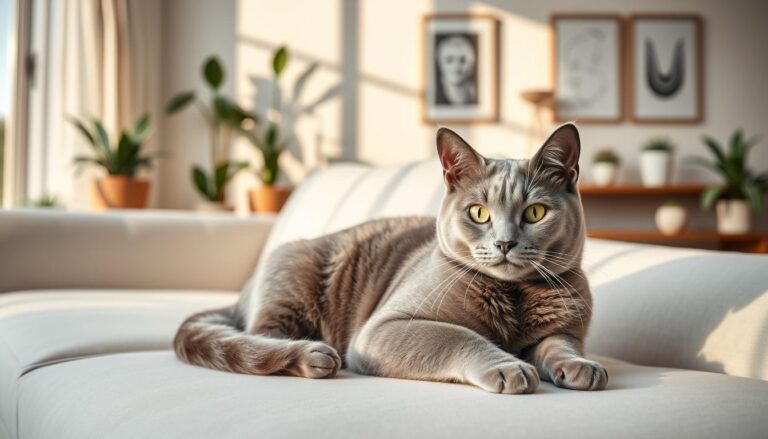
A gray shorthair cat is any shorthaired cat with a gray coat, not a breed by itself. You may find one in a family home, a shelter, or a pedigreed litter. The word gray describes color, while shorthair describes coat length. Either trait can appear in a nonpedigreed cat or a recognized breed.
One gray cat may have a pale coat and quiet habits; another may be dark, lively, and eager to greet people. Their looks can range from solid gray to striped or white-marked, and their temperaments depend on the individual. If you are choosing among pets, the coat is only one small part of the match. This article helps you tell color, pattern, breed, and daily needs apart. Your cat’s coat can help you describe its looks, but it cannot tell you its pedigree or personality.
Table of Contents
What Does a Grey Shorthair Cat Describe?
In cat coat terminology, gray is often called blue, and the color alone cannot tell you a cat’s breed. Blue means gray fur in this setting, not necessarily a bright blue shade. A gray coat can appear on cats with different ancestry, body shapes, and temperaments.
Dilution is a recessive coat-color effect that makes black fur appear blue or gray. A cat needs the right inherited gene copies for this effect to show. The term describes how the color looks, not a breed or a behavior.
Why Black Fur Can Look Blue
Black fur contains pigment that can look lighter when dilution changes how that pigment appears along the hair. The result may look gray, slate, or blue-gray under natural light. Two cats with similar coats may still have very different family histories.
Coat color is only one inherited feature. It does not reveal a cat’s full ancestry, and it cannot confirm whether a cat belongs to a registered breed. A mixed-breed cat can have the same blue-gray shade as a pedigreed cat.
The Range of Gray Shades
Gray coats range from pale silver to deep slate. Some look nearly white in bright light, while darker coats can seem charcoal indoors. The coat may also look different as light changes across the day.
These shades appear in pedigreed and mixed-breed cats alike. Even a striking silver-gray coat does not point to one specific breed. Treat coat color as a visual clue, not a pedigree test.
A gray coat can describe what you see, but it cannot prove a cat’s breed.
When you describe a cat, note the shade and any visible markings. Those details make a clear description without making claims about ancestry.
How Do Gray Tabby and Bicolor Coats Differ?
A gray-and-black shorthair cat may have a solid two-color coat or a tabby pattern, so look at the markings rather than the color names alone. Pattern describes how colors and markings appear across the body. A gray-and-white cat may be bicolor, while a gray-and-black cat may show stripes or patches.
Bicolor cats have at least one-third white fur plus another color. Blue-and-white is one bicolor combination, and some bicolor cats also have tabby markings. A cat can therefore show white areas and clear stripes at the same time.
Solid, Bicolor, and Gray-and-Black Coats
A solid gray coat looks mostly even in color, though light may reveal subtle differences. A bicolor coat has white fur alongside gray, black, or another color. A gray-and-black coat can show solid patches, clear stripes, or both.
Check the sides, legs, and shoulders instead of judging by one patch. A gray cat with white paws may have a bicolor coat, while its gray areas can still carry tabby markings. The pattern and the colors are separate parts of the description.
The Four Tabby Patterns
Tabby cats have an M-shaped marking on the forehead. The four recognized patterns are mackerel, classic, spotted, and ticked. Their body markings help you tell them apart.
Mackerel tabby stripes run in narrow, parallel lines along the body. Classic tabbies have broad side swirls and butterfly-shaped marks over the shoulders. Spotted tabbies show spots, while ticked coats have banded hairs with less obvious body stripes.
Some cats show mixed or faint markings, so the pattern may not look sharply defined. Check the body pattern as well as the forehead before calling a coat tabby. A clear description can include both the pattern and color.
What Makes a Gray Domestic Shorthair Different?
A gray Domestic Shorthair is a nonpedigreed shorthaired cat, not a distinct gray breed. Domestic Shorthair describes a type of cat with short fur and no documented pedigree. Gray cats in this group can vary widely in size, shape, and markings.
A gray tabby Domestic Shorthair is described by both its markings and its nonpedigreed status. Healthy household cats average 6-12 pounds, though size varies by sex and breed. That range is a general guide, not a weight goal for every cat.
What Domestic Shorthair Means
The term does not name one standardized cat breed. It includes many cats with short coats whose ancestry is mixed or undocumented. Their coats may be solid, tabby, bicolor, or patterned in other ways.
One cat may have a long-looking body and fine legs, while another has a rounder shape. Those differences do not make either cat more or less of a Domestic Shorthair. Their variety is part of what makes this group common in homes and shelters.
Clues You Can Use Without Pedigree Papers
You can describe a cat clearly without guessing its breed. Start with these three details:
- Coat length: note whether the fur is short, medium, or long.
- Visible markings: describe solid color, stripes, spots, or white areas.
- Records: check documented pedigree or adoption records for known history.
Appearance can suggest ancestry, but many breeds share similar features. A gray cat with a round face is not automatically a pedigreed cat. Use a registered pedigree to confirm a breed, since appearance can only suggest ancestry.
What Is the British Shorthair Like?
The British Shorthair is a sturdy, round-faced pedigree cat whose best-known coat is smoky blue. Blue is the feline term for that gray shade. The breed has a round head, compact build, and dense, plush coat.
Mature British Shorthairs average 6-12 pounds, though some weigh more. The breed comes in more than 30 coat colors, so blue-gray is familiar but not the only option. A gray British Shorthair kitten is pedigreed only when its lineage is documented.
Round Build and Plush Coat
The British Shorthair’s broad head and sturdy body give it a solid appearance. Its short coat feels dense and plush rather than sleek. These traits can make a gray chubby cat breed a tempting search, but a rounded shape alone cannot confirm breed.
Use this comparison to separate a documented breed from a nonpedigreed cat:
| Trait | British Shorthair | Domestic Shorthair |
|---|---|---|
| Build | Compact and sturdy | Varies by cat |
| Coat | Dense, short, plush | Short, with varied colors |
| Breed status | Pedigreed when documented | Nonpedigreed shorthaired cat |
Independent, People-Friendly Temperament
Many British Shorthairs enjoy being near people without wanting constant contact. They may sit beside you instead of on your lap, and some prefer cuddles on their own terms. Their family can often leave them alone for part of the day.
This does not mean every cat will act the same way. A kitten’s early experiences and its own preferences shape how it responds to handling. A British Shorthair’s usual weight range is only one detail to consider when meeting one.
If you want a lap cat, meet the individual cat rather than assuming this breed will enjoy being held.
What Sets the Russian Blue Apart?
A Russian Blue is recognizable for its solid blue-gray coat and vivid green eyes. Solid means the coat lacks tabby stripes or white patches. Its short, dense double coat gives the fur a plush look.
A blue-gray coat and green eyes do not prove that a cat is a Russian Blue. A Domestic Shorthair can have a similar shade, and eye color alone does not confirm ancestry. Pedigree papers provide the clearest breed evidence.
The breed is associated with Russia and is known for its distinctive appearance. Its dense coat may look silvery where light catches the hair. The short fur is part of the breed’s look, but other cats can share that feature.
Russian Blues may be reserved around strangers and close with familiar people. These are tendencies, not promises about every cat. A calm cat may need time to warm up in a new room, while another may approach visitors quickly.
Green eyes are a striking feature, yet they should be viewed alongside the coat and documented lineage. Even a cat with the right color and eye shade may have mixed ancestry. The full set of features gives you a better description than one trait.
Ask about the cat’s records and family history if you are considering a pedigreed kitten. A breeder should be able to explain its lineage and provide the related documents. Look for documented ancestry, not just a silvery coat, when confirming a Russian Blue.
How Do the Chartreux and Korat Compare?
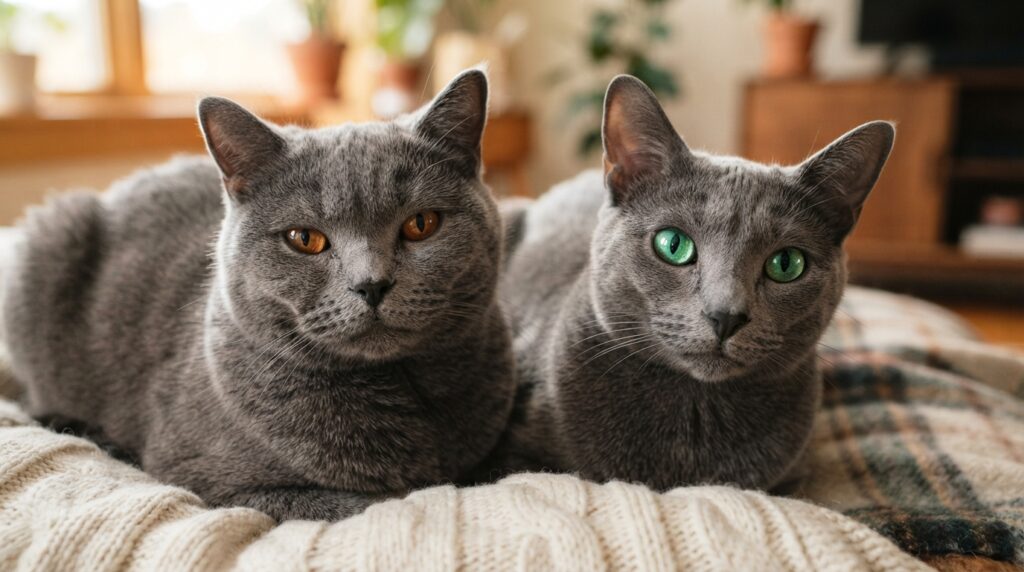
The Chartreux and Korat both have blue-gray coats, but their origins and eye-color ranges help distinguish them. Origin and coat detail add useful context when two breeds share a color. Neither breed can be confirmed by shade alone.
The Chartreux is linked with France, while the Korat originated in Thailand. Their coat textures and eye colors offer more clues than the shared blue-gray color. This comparison keeps those differences clear.
Chartreux: A French Blue Coat
The Chartreux has a blue-gray coat and eyes that range from copper to gold. The coat gives the cat a muted gray look, while the warm eye colors create a contrast. Its French origin is another distinct part of its breed profile.
Coat shade may change in appearance under indoor or outdoor light. Look at the eyes and the full coat, rather than a single photograph. Records remain important when you need to confirm a pedigree.
Korat: A Silver-Tipped Coat from Thailand
The Korat has a blue coat tipped with silver. Its eyes can be green or amber, creating a different mix of features from the Chartreux. The breed’s Thai origin is part of its history.
| Breed | Origin | Coat | Eye colors |
|---|---|---|---|
| Chartreux | France | Blue-gray | Copper to gold |
| Korat | Thailand | Blue with silver tips | Green or amber |
A cat may not show every breed feature clearly, especially in a quick visit. Keep the eye-color range and coat details in mind when comparing cats. Use a breed’s full combination of features instead of one color when comparing pedigreed cats.
Can an American Shorthair Have a Gray Coat?
Yes, an American Shorthair can have a gray or gray tabby coat. Gray describes the color, while tabby describes markings. The breed is recognized in the United States and comes in many colors and patterns.
A gray coat does not by itself prove American Shorthair ancestry. The breed developed from cats valued for controlling rodents. A gray mixed-breed cat may look similar, so use more than coat color to compare them.
When you meet a cat, check these three points:
- Pedigree documentation: records show whether the cat has known breed lineage.
- Overall build: compare the whole body rather than focusing on one feature.
- Coat markings: note whether the coat is solid gray or gray tabby.
The American Shorthair’s history and coat variety make it distinct as a recognized breed. Still, a single trait, such as stripes or a gray coat, can appear in many cats. The individual’s documents matter when breed identity affects your plans.
If a seller calls a cat an American Shorthair, ask what records support that claim. A kitten’s color may be visible right away, but ancestry depends on its documented family line. Confirm the pedigree before treating a gray cat’s appearance as proof of American Shorthair ancestry.
Which Other Pedigree Gray Shorthairs Should You Know?
Burmese cats, Egyptian Maus, and Selkirk Rex cats offer distinct alternatives if you want a pedigreed cat with gray in its coat. Gray may appear as a solid color, a silver shade, or part of a pattern. Their hair types and markings differ.
Some Selkirk Rex cats have curly short coats, while others have long coats. Check coat length if you specifically want a shorthair. The table compares four breeds and color details.
Burmese and European Burmese
Burmese cats have four recognized colors, including blue and platinum. European Burmese cats can also have blue and blue-cream coats. These color names describe coat shades, not separate proof of a cat’s pedigree.
The blue shade may look gray to many people. Platinum is another pale color option. Breed records help separate these pedigreed cats from other gray shorthairs.
Egyptian Mau
The Egyptian Mau is a naturally spotted breed. It can have a gray-hued silver coat, with spots that remain part of its distinct appearance. That pattern sets it apart from cats whose gray coats look solid.
The spotted coat is a breed feature, not a sign that every spotted gray cat is an Egyptian Mau. A cat’s coat can suggest a comparison, but records establish lineage.
Selkirk Rex
The Selkirk Rex has a curly coat that may be short or long. Coat colors include solid blue, blue tabby, and blue-and-white. Its curls make the coat texture different from the sleek or plush coats found in many shorthairs.
| Breed | Gray coat or pattern | Hair type | Distinctive detail |
|---|---|---|---|
| Burmese | Blue or platinum | Short | Four recognized colors |
| European Burmese | Blue or blue-cream | Short | Includes a cream-and-blue option |
| Egyptian Mau | Gray-hued silver, spotted | Short | Naturally spotted breed |
| Selkirk Rex | Blue, blue tabby, blue-and-white | Short or long, curly | Curly coat texture |
Coat length matters if your priority is a short-haired cat, since Selkirk Rex cats may have either hair length. Breed names alone do not tell you which coat type a kitten will have. Check whether the coat is short or long if your priority is specifically a shorthair.
What Is a Gray Shorthair Cat’s Personality Like?
A gray coat does not tell you whether a cat will be outgoing, shy, playful, or reserved. Personality belongs to the individual cat, not its color. Breed tendencies can offer clues, but they cannot predict exactly how one cat will act.
Friendliness, sociability, boldness, and aggression are common behavior traits researchers assess. Friendliness means comfort with people; sociability means seeking company. Boldness relates to confidence in new settings, while aggression involves threatening or forceful behavior.
Temperament Is More Than a Coat Color
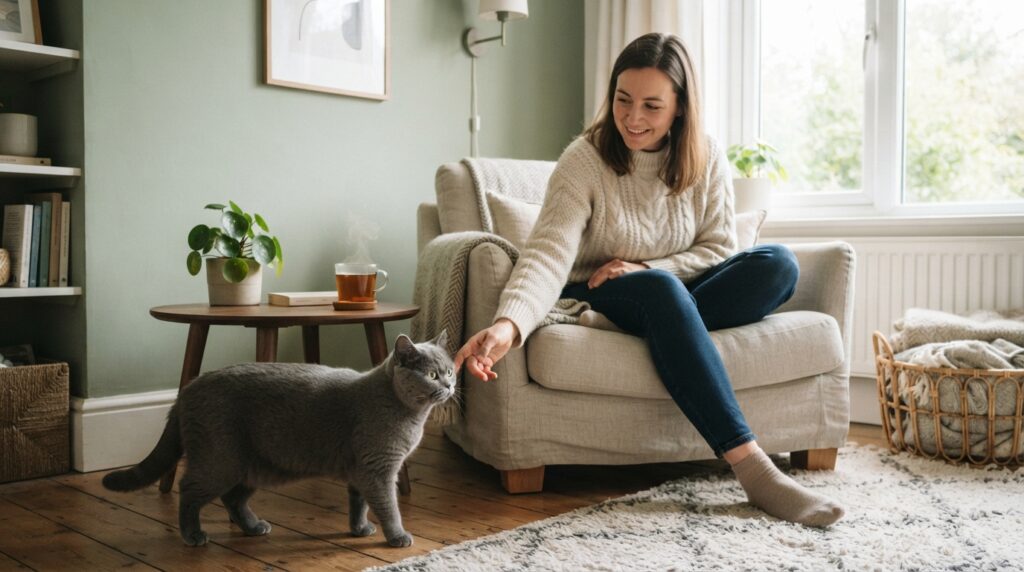
A review of domestic-cat temperament research summarized 43 original papers published between 1986 and 2020. The papers assessed behavior in different ways, so one trait does not explain a whole cat. A cat may be friendly at home but cautious with strangers.
Daily routine, early experiences, and health can also affect behavior. A cat that hides during a loud visit may feel more relaxed in a quiet home. Give the animal room to show its usual response.
What to Notice When You Meet a Cat
Watch three things during a meeting:
- Response to people: notice whether the cat approaches, watches, or avoids you.
- Reaction to new surroundings: see how it explores or settles in an unfamiliar room.
- Comfort with handling: ask whether the cat accepts gentle touch and being picked up.
One meeting cannot reveal every side of a cat’s behavior. Ask how it acts in familiar settings, and allow it to approach at its own pace. Research on cat temperament treats behavior as a set of traits, not a coat-color rule.
Base your expectations on the individual cat’s behavior and history, not its coat color. A quiet first meeting may reflect stress rather than a lasting preference.
Which Gray-and-White Shorthair Cats Can You Find?
Gray-and-white coats appear in mixed-breed cats and several pedigreed shorthair breeds. Gray-and-white describes the visible colors, not the cat’s breed. Domestic Shorthairs, American Shorthairs, British Shorthairs, American Curls, and Cornish Rex cats can all have this coat combination.
Solid gray patches with white differ from gray tabby markings with white. The first pattern has broad areas of gray and white, while the second includes stripes or other tabby marks in its gray areas. Both can appear on short coats.
A Domestic Shorthair may have white paws or a broad white chest alongside gray fur. An American Shorthair or British Shorthair may show similar colors, while American Curls and Cornish Rex cats add other breed traits. The same pattern can cross breed lines.
Look closely at the gray sections. If they show stripes, the cat has gray tabby markings with white; if they look even, the gray areas are solid. A patch of color by itself does not prove a pedigree.
When you describe a shelter cat, simple coat terms help others picture it. You can note gray patches, white areas, and any visible stripes without guessing its ancestry. Describe the visible pattern first, then use pedigree records to identify the breed.
How Should You Match a Cat to Your Home?
The best fit is the individual cat whose social needs and activity level suit your daily routine. Routine matters because cats differ in how much company, play, and handling they enjoy. Coat color has no role in that match.
Compare your schedule, handling preferences, activity level, and grooming time before choosing a cat. Breed tendencies may help you ask better questions, but the cat’s observed behavior matters more. A home with long workdays may suit a more independent cat.
Match the Cat’s Social Needs to Your Routine
British Shorthairs may spend time alone while their family is away. Korats are described as social and attention-seeking, while Russian Blues may be reserved with strangers. These are breed tendencies, not rules for every cat.
Think about how much time you are home and whether you want a cat that seeks frequent company. A social cat may need more interaction during the day. A more independent cat may still need play, care, and attention.
Consider Activity, Handling, and Grooming
Ask how much play the cat enjoys and whether it likes being picked up. Some cats prefer floor play and nearby company, while others seek laps or active games. Your household’s noise and pace can affect the fit.
Consider grooming before bringing a cat home. Short hair often takes less brushing than a long coat, while curly coats may need different care. Choose a routine you can keep up with, not one you hope to start later.
- Time at home: note how long the cat would be alone most days.
- Handling: find out whether the cat accepts touch or prefers space.
- Activity: ask what play and movement the cat enjoys.
- Grooming: learn how often its coat needs care.
Ask the foster caregiver or breeder how that specific cat responds to being alone and handled.
What Care Does a British Shorthair’s Coat and Build Need?
A British Shorthair’s dense coat benefits from weekly brushing and careful attention to heat. Weekly brushing helps keep the short coat free of tangles. Its thick fur can also make hot weather harder to manage.
British Shorthairs can overheat because of their thick coats, so plan for cool indoor spaces. Keep a fresh water bowl available and watch how the cat behaves during warm days. A shaded, cool room gives it a place to rest.
Brushing a Dense Coat
Brush the coat once a week with a tool suited to short fur. Move gently over the body and check for knots, loose hair, or skin changes. Keep sessions calm so the cat can get used to the routine.
Short hair still needs basic care. Regular brushing helps you notice changes that might otherwise stay hidden beneath thick fur. Stop if the cat becomes upset, then try again later for a shorter session.
Managing Heat and Indoor Safety
Hot rooms and direct sun can make it harder for a thick-coated cat to stay comfortable. Make cool indoor resting places easy to reach, especially during warm weather. Do not leave the cat in a parked car or an overheated room.
Use this short care list as part of the routine:
- Brush the coat weekly to help prevent tangles.
- Offer access to cool indoor spaces during warm weather.
- Watch for heavy panting, weakness, or unusual distress in heat.
Contact a veterinarian promptly if you see concerning signs during hot weather. Keep the cat indoors and make a cool resting place available during hot weather.
What Health and Lifespan Should You Expect?
A British Shorthair can live 12 to 20 years, so plan for long-term veterinary care. Long-term care includes routine exams as well as attention to changes at home. A cat’s age and health history shape its needs.
Polycystic kidney disease and hypertrophic cardiomyopathy are conditions to discuss with your veterinarian. Hypertrophic cardiomyopathy is a heart condition that affects the heart muscle. A vet can explain what screening may suit your cat.
Lifespan and Routine Veterinary Care
Regular veterinary visits help track weight, teeth, and general health over time. Bring up changes in eating, drinking, movement, or energy. A small change can be useful information when your vet checks the cat.
Keep a record of past visits, test results, and medicines. That history can help the vet spot patterns as the cat ages. Your care plan may change as new needs arise.
Conditions to Discuss With Your Veterinarian
Ask about the cat’s family history and any screening its relatives received. A short checklist can help you prepare:
- Does the family history include kidney or heart disease?
- Which screening tests fit this cat’s age and background?
- What symptoms should prompt a call or visit?
Changes such as unusual tiredness or a sudden shift in appetite deserve attention. This information is educational, not a substitute for veterinary advice. Read the site’s health information disclaimer and consult a qualified veterinarian about your cat.
Ask your veterinarian which screening and follow-up schedule fits your cat’s age and history. Keep copies of test results so future visits build on the same record.
How Much Does a Gray Shorthair Cat Cost?
In 2026, a reputable-breeder British Shorthair costs $1,200-$3,500, while adoption fees are $75-$200. Price depends on whether you adopt or choose a pedigreed cat. A gray shorthair cat for sale may be pedigreed or nonpedigreed, with very different costs.
Estimated first-year ownership costs, including setup and veterinary care, are $2,500-$4,500. A kitten’s coat color does not set one price across all cats. Pedigree, quality, and adoption route affect the amount.
British Shorthair Prices and First-Year Costs
In 2026, pet-quality British Shorthairs cost $1,200-$2,500, while show- or breeding-quality cats cost $2,500-$3,500. Blue pet-quality cats usually fall in the lower half of the pet-quality range. Rare golden or chocolate cats can cost $5,500.
| Route or category | 2026 price | What it covers | Condition |
|---|---|---|---|
| Pet-quality British Shorthair | $1,200-$2,500 | Pedigreed pet kitten | Blue usually lower half |
| Show- or breeding-quality cat | $2,500-$3,500 | Pedigreed cat for show or breeding | Quality category affects price |
| Rare golden or chocolate coat | Up to $5,500 | British Shorthair with rare color | Color can raise price |
| Adoption fee | $75-$200 | British Shorthair adoption | Fee varies by adoption route |
First-year costs cover setup and veterinary care as well as the cat’s adoption or purchase. Reputable breeders may have waiting lists of 6-12 months. British Shorthair prices in 2026 can help you compare those categories.
Adoption, Availability, and Ownership Checks
Adoption can cost less at the start, while a breeder may offer documented lineage. Check what the fee or purchase terms include before making a choice. Availability also matters if you want a specific breed or coat color.
Savannah kittens can cost $1,500-$20,000 or more in 2026, and early-generation kittens may be offered for $20,000 or more. An F1 Savannah has a serval parent, and later generations generally cost less. Savannahs are not a gray shorthair price benchmark.
State and local laws may restrict Savannah ownership or require permits, sometimes based on generation. The Ashera is not recognized as a distinct breed by major cat registries. Its advertised $125,000 price does not prove a verified sale.
Before you commit, check these points:
- Verify pedigree and health records.
- Read the written purchase or adoption terms.
- Check local rules before acquiring a restricted hybrid.
A high advertised price does not prove a sale, and hybrid ownership may face local limits.
Compare the cat’s long-term needs with your budget, not only its starting price. Check local ownership rules before paying a deposit for a hybrid cat.
Conclusion
A gray shorthair can be a mixed-breed companion or a pedigreed cat, and the color alone does not tell you which. Gray describes appearance, not a promise about personality or breed. A Domestic Shorthair or a pedigreed cat may suit your home, depending on the individual.
Look beyond color when you choose a pet. Ask how the cat behaves, what care it needs, and what its records show. Those details help you plan for a good fit with your family and daily life.
Make time for a calm meeting before you decide. Meet the cat in person, ask about its history and needs, and choose the companion whose behavior fits your home.