Can Cats Eat Watermelon? Safety, Risks & Serving Tips
If your cat is staring at your watermelon on a hot summer day, you may wonder whether sharing a small bite is safe.
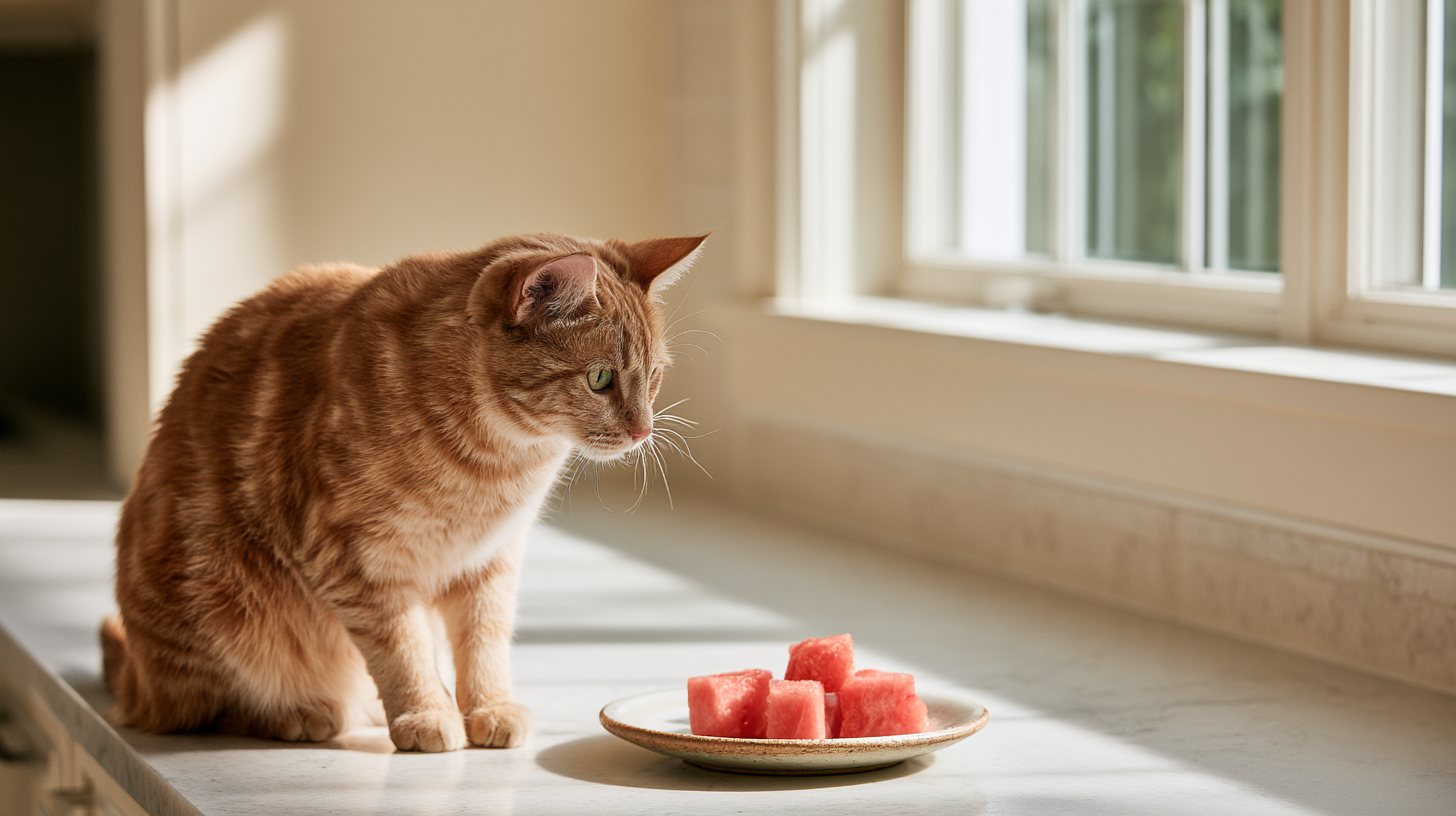
Yes, healthy cats can generally eat a small amount of plain watermelon flesh occasionally, as long as the seeds and rind are completely removed. Watermelon is not an essential part of a cat’s diet, however, and too much may cause digestive upset.
Cats are obligate carnivores, so they get the nutrition they need primarily from a complete and balanced meat-based diet—not fruit. Watermelon should therefore be treated as an occasional extra, not a regular addition to your cat’s meals. Veterinary sources including PetMD, Hill’s, and Purina similarly recommend keeping portions small and removing both seeds and rind.
Quick Answer: Healthy adult cats can have a small bite of fresh, plain, seedless watermelon occasionally. Remove all seeds and rind first. Cats with diabetes, obesity, digestive problems, or other medical conditions should have human foods only with their veterinarian’s guidance.
Is Watermelon Safe for Cats?
Plain watermelon flesh is generally considered safe for a healthy adult cat when offered in a small amount.
The important word here is plain.
The watermelon should not contain:
- rind
- seeds
- added sugar
- syrup
- artificial sweeteners
- seasoning
- other ingredients
A cat that steals one small piece of seedless watermelon flesh is unlikely to have a serious problem solely because it ate watermelon. However, individual cats can respond differently to unfamiliar foods.
Eating too much may cause vomiting, diarrhea, gas, or other gastrointestinal upset.
Is Watermelon Good for Cats?
Watermelon is mostly water, which means a small piece provides some additional moisture. That does not make watermelon an important source of hydration or nutrition for cats.
Cats are obligate carnivores. Their nutritional requirements are fundamentally different from ours, and properly formulated cat food is designed to provide the nutrients they need.
Watermelon contains vitamins, minerals, and antioxidants that humans associate with a nutritious diet, but a cat eats such a tiny amount that these nutrients should not be considered a meaningful reason to feed it.
In other words:
Watermelon can be a treat. It shouldn’t be a nutritional strategy.
Veterinary guidance similarly notes that watermelon offers limited nutritional value to cats even though its water content can contribute some moisture.
What Parts of Watermelon Can Cats Eat?
| Watermelon part | Can cats eat it? | Main concern |
|---|---|---|
| Plain red flesh | Yes, occasionally | Too much may cause digestive upset |
| Seeds | No | Choking, digestive risks, cyanogenic compounds |
| Rind | No | Difficult to digest; choking or obstruction risk |
| Sweetened watermelon products | Best avoided | Added sugar and other ingredients |
| Watermelon juice | Best avoided | Easy to consume too much sugar; unnecessary |
The safest option is therefore simple:
A very small piece of fresh watermelon flesh with no seeds and no rind.
Can Cats Eat Watermelon Seeds?
It’s best not to let cats eat watermelon seeds.
Seeds can create a choking or gastrointestinal risk, particularly for smaller cats. Mature watermelon seeds also contain cyanogenic compounds that can release cyanide when chewed, which is another reason to remove them before offering the fruit. Veterinary sources including Hill’s, Purina, and PetMD recommend removing watermelon seeds.
That does not mean you should panic automatically if a healthy adult cat accidentally swallowed a single seed.
The appropriate response depends on factors such as how many seeds were eaten, the cat’s size and health, and whether any symptoms appear.
If your cat consumed numerous seeds or begins acting unwell, contact your veterinarian for advice.
Can Cats Eat Watermelon Rind?
No. Watermelon rind should not be offered to cats.
The rind is much tougher and more difficult to digest than the soft flesh. Eating it may result in gastrointestinal upset and, in more serious situations, could contribute to choking or an intestinal obstruction.
Always cut the red flesh completely away from both the green rind and the firm white portion before sharing watermelon with your cat.
How Much Watermelon Can a Cat Eat?
Think tiny, not “a slice.”
For a healthy adult cat trying watermelon for the first time, one or two very small, bite-sized pieces is plenty.
There is no nutritional reason to give your cat a large serving.
PetMD recommends only a small portion, while Purina advises that treats in general should account for no more than about 10% of a cat’s diet, with the remaining diet coming from complete and balanced cat food.
For watermelon specifically, there’s no need to get anywhere close to that 10% limit.
If your cat isn’t interested, don’t encourage it. Cats do not need fruit.
How to Safely Give Watermelon to Your Cat
If your healthy adult cat wants to try some, preparation matters.
- Choose fresh, plain watermelon.
Avoid watermelon served with sugar, syrup, seasoning, or other ingredients. - Remove the rind completely.
Use only the soft flesh. - Remove every visible seed.
Seedless watermelon is the easiest option. - Cut the flesh into very small pieces.
Small pieces reduce choking risk and make portion control easier. - Offer only a tiny amount.
For a first taste, one small piece is enough. - Watch your cat afterward.
Stop offering watermelon if you notice vomiting, diarrhea, appetite changes, or another unusual reaction.
And remember: you don’t need to convince your cat to eat it.
If your cat sniffs the watermelon, looks at you like you’ve personally offended its ancestors, and walks away—that’s perfectly fine.
Which Cats Should Avoid Watermelon?
Watermelon isn’t appropriate for every cat.
Cats With Diabetes
Watermelon contains natural sugars and carbohydrates. Cats with diabetes should not be given sugary human foods without veterinary guidance. PetMD specifically advises avoiding watermelon for diabetic cats, while other veterinary guidance recommends consulting the cat’s veterinarian first.
Overweight or Obese Cats
Extra calories from treats can make weight management more difficult.
If your cat is on a weight-loss plan, ask your veterinarian which treats—if any—fit into that plan.
Cats With Sensitive Stomachs
Introducing a new food may trigger vomiting or diarrhea in some cats.
If your cat already has gastrointestinal problems, don’t experiment with new human foods without discussing them with your veterinarian.
Cats Eating a Prescription Diet
Veterinary diets may be prescribed for specific medical reasons.
Adding treats can sometimes interfere with the diet’s intended purpose, so check with your veterinarian before offering foods outside it.
Kittens
Kittens have particularly important nutritional requirements for growth and development.
Although some veterinary sources consider very small amounts of watermelon flesh safe for healthy kittens, others recommend avoiding it because kittens have sensitive digestive systems, small stomachs, and greater nutritional priorities. The practical approach is simple: there is no need to give watermelon to a kitten. A complete and balanced kitten diet is far more important.
What If My Cat Already Ate Watermelon?
What your cat ate matters more than the word “watermelon” itself.
A Small Amount of Plain Flesh
If a healthy cat ate a tiny amount of seedless, rind-free watermelon and is behaving normally, serious problems are unlikely.
Monitor your cat for digestive upset.
A Large Amount of Watermelon
Eating a larger amount increases the chance of vomiting, diarrhea, or other gastrointestinal problems.
Contact your veterinarian if your cat develops concerning symptoms or if you’re unsure how much was consumed.
Watermelon Rind
Because rind is tough and difficult to digest, contact your veterinarian for advice if your cat swallowed a substantial piece—particularly if your cat begins vomiting, stops eating, appears uncomfortable, or has difficulty passing stool.
Watermelon Seeds
If your cat consumed multiple seeds, contact your veterinarian for individualized guidance rather than trying to treat the situation yourself.
Do not induce vomiting or give home remedies unless a veterinarian specifically instructs you to do so.
When Should You Contact a Veterinarian?
Seek veterinary advice if your cat has eaten watermelon and develops symptoms such as:
- repeated vomiting
- persistent diarrhea
- unusual lethargy
- loss of appetite
- difficulty swallowing or breathing
- apparent abdominal discomfort
- difficulty passing stool
- other significant changes in behavior
You should also contact your veterinarian if your cat swallowed a significant amount of rind or seeds, or if the cat has an underlying medical condition.
If your cat is choking, having trouble breathing, collapsing, or showing other severe symptoms, seek emergency veterinary care.
Frequently Asked Questions
Can kittens eat watermelon?
Watermelon isn’t necessary for kittens. Even though a tiny amount of plain flesh may not be toxic to an otherwise healthy kitten, kittens need calorie- and nutrient-dense food specifically formulated for growth. It’s reasonable to skip watermelon and stick with appropriate kitten food and treats.
Can cats eat seedless watermelon?
Yes, a healthy adult cat can generally have a very small amount of plain seedless watermelon flesh occasionally. Make sure no hard seeds or rind remain.
Can cats eat frozen watermelon?
A tiny piece of plain watermelon that has been frozen and then allowed to soften may be acceptable for some healthy cats. Avoid large, rock-hard frozen chunks, which can create chewing or choking concerns.
Can cats eat watermelon rind?
No. The rind is difficult for cats to digest and may create choking, digestive, or intestinal obstruction risks.
Can cats eat watermelon seeds?
It’s best to remove all seeds before offering watermelon. Seeds can present choking and digestive risks, and mature seeds contain compounds capable of releasing cyanide when chewed.
Can cats drink watermelon juice?
It’s better to offer neither watermelon juice nor commercial watermelon drinks. Juice makes it easier to consume more sugar, and packaged drinks may contain additional ingredients that aren’t appropriate for cats.
Fresh water should remain your cat’s primary source of hydration.
Why does my cat like watermelon?
Cats generally aren’t attracted to sweetness in the same way humans are. A cat interested in watermelon may instead be responding to its smell, high moisture content, texture, temperature, or simply curiosity.
The Bottom Line
So, can cats eat watermelon? Yes—most healthy adult cats can have a tiny amount of plain, seedless, rind-free watermelon flesh occasionally.
Watermelon isn’t necessary for feline nutrition, though, and more isn’t better.
Remove all seeds and rind, keep the portion very small, and avoid watermelon if your veterinarian has advised dietary restrictions. Cats with diabetes, obesity, gastrointestinal problems, or other medical conditions should have new foods introduced only with veterinary guidance.
Ultimately, a complete and balanced cat food should provide the overwhelming majority of your cat’s nutrition.
Veterinary disclaimer: This article provides general educational information and is not a substitute for diagnosis or individualized advice from a veterinarian. If you’re concerned about something your cat has eaten or about symptoms your cat is experiencing, contact your veterinarian.