Can Cats Have Popcorn? Safety Tips for Cat Owners in 2026
Can cats have popcorn?
If your cat steals a little plain, fully popped popcorn, it’s usually less concerning than a piece covered in toppings. Still, popcorn isn’t made for cats and shouldn’t take the place of their regular, balanced food. Treats and snacks should stay limited; VCA recommends that treats make up no more than 10% of a cat’s daily calories. Cat Treats | VCA Animal Hospitals
Table of Contents
So, while a small accidental bite of plain popcorn is unlikely to be a reason to panic, there’s no need to offer it on purpose. A cat treat made for cats is a better choice.
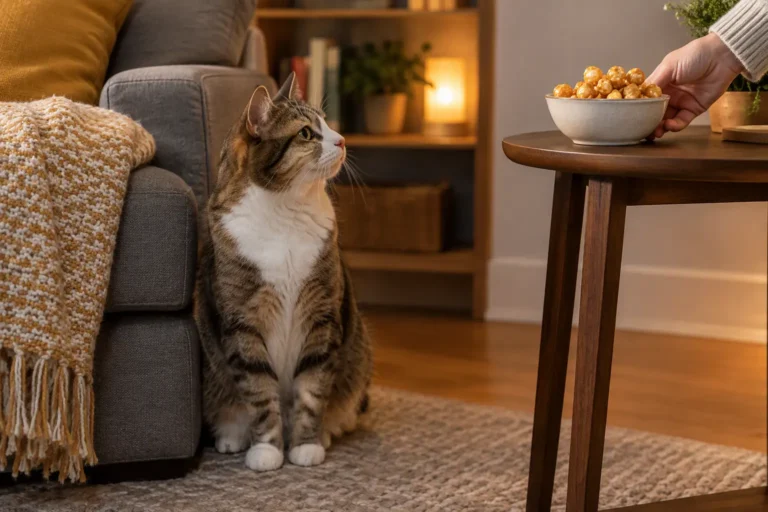
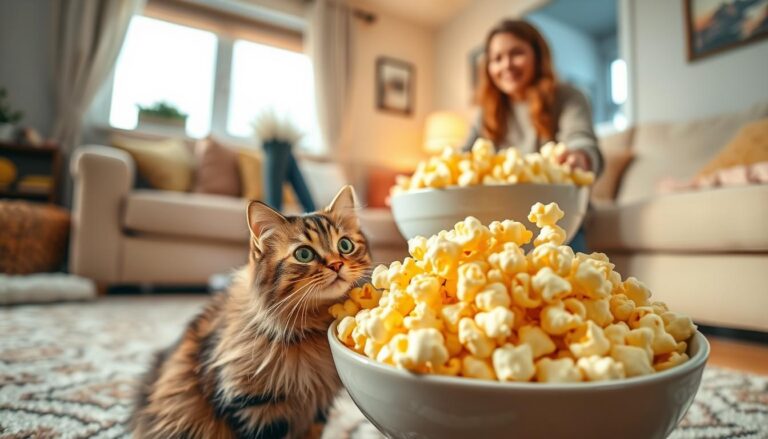
Movie night, popcorn bowl on the table, cat watching every bite. If your cat manages to snag a piece, is it time to worry?
A small piece of plain, fully popped popcorn is generally not considered toxic to cats. But popcorn isn’t a useful regular treat, and some toppings or hard kernels can cause problems. Here’s what cat owners should know, including what to do if a curious kitty samples your snack. Can Cats Eat Popcorn? – PetMD
In this article :
- Is Popcorn Bad for Cats?
- Can popcorn kernels hurt cats?
- Are buttered, salty, or seasoned toppings risky?
- Why popcorn isn’t a nutritious cat treat
- What should I do if my cat ate popcorn?
- The bottom line
Can cats eat buttered or flavored popcorn?
It’s best to keep flavored popcorn away from your cat. Butter and oil add fat, while salty coatings can add a lot of sodium. Extra-rich or salty snacks may upset a cat’s stomach, and excessive salt can be harmful. Can Cats Eat Salt? – Pet Poison Helpline
Pay special attention to seasoning blends. Onion and garlic are toxic to cats and may be present in savory powders or flavorings. If your cat eats popcorn seasoned with onion or garlic, contact your veterinarian or an animal poison-control service promptly for advice. Common Cat Poisons and Hazards – Pet Poison Helpline
Can popcorn kernels hurt cats?
Yes, hard or unpopped kernels are a reason to be cautious. They can be difficult for a cat to chew and may pose a choking risk; swallowing one whole could also cause an obstruction. Keep unpopped kernels and partly popped pieces away from your cat, and don’t leave a snack bowl where they can investigate it. Can Cats Eat Popcorn? – PetMD
What should I do if my cat eats popcorn?
Move the bowl out of reach and check what your cat ate. Note whether it was plain or seasoned, whether there were hard kernels, and roughly how much is missing. Keep the packaging or ingredient list nearby if the popcorn was flavored.
If your cat ate a small amount of plain, fully popped popcorn and seems normal, keep an eye on them. If the popcorn contained onion or garlic, your cat swallowed a hard kernel, ate a large amount, or you’re unsure about the ingredients, call your veterinarian for guidance. Seek urgent veterinary help if your cat is choking, struggling to breathe, or showing worrying changes in their behavior or health. Don’t try to make your cat vomit or give home remedies unless a veterinary professional tells you to. Did Your Cat Eat Something Poisonous | Pet Poison Helpline®
What are safer snacks for cats?
Choose a treat made specifically for cats and follow the feeding guidance on its packaging. Keep treats modest, since they add calories and shouldn’t displace your cat’s complete, balanced food. If your cat has a medical condition or eats a prescription diet, ask your veterinarian which treats are suitable. Cat Treats | VCA Animal Hospitals
Want to make movie night more fun for your cat? Try a favorite toy, a play session, or a few of their usual treats instead of sharing from your popcorn bowl.
The bottom line
Can cats have popcorn? A small piece of plain, fully popped popcorn is generally less concerning than seasoned popcorn, but it’s not an ideal cat treat. Avoid toppings, especially onion or garlic seasoning, and keep hard kernels out of reach. If your cat eats flavored popcorn or seems unwell, contact your veterinarian.
Has your cat ever tried to steal your movie-night snack? Share your cat-safe treat ideas in the comments.
This article is for general information and isn’t a substitute for veterinary advice.